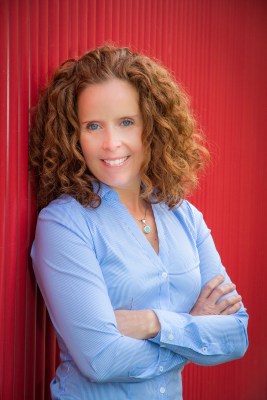
 Wendy Mendes, PhD is one of the first local government food systems planners in North America. In 2003, the Vancouver City Council approved an innovative directive to support the development of a just and sustainable food system for the City of Vancouver, British Columbia. This directive not only resulted in the establishment of the Vancouver Food Policy Council, one of the oldest food policy councils in North America, but also established two full-time city staff positions to facilitate food system goals: a food policy coordinator and a food systems planner. In the role of food systems planner, Mendes led the development of a number of important and innovative food system plans, programs and policies for over a decade. She witnessed first-hand the field grow and change over time and reach a level where food systems issues are now commonly incorporated when planning for other urban issues. In addition to her practitioner-oriented work, Mendes is currently Adjunct Professor at the School of Community and Regional Planning at the University of British Columbia (UBC), Manager of Community-Engaged Learning at UBC’s Centre for Community Engaged Learning, Research Associate with Ryerson University’s Centre for Studies in Food Security, and Instructor for the Food Security Certificate at Ryerson University. Her work has equally inspired practicing planners, local governments, and academics across the globe. For more information about the City of Vancouver’s sustainable food systems work, visit http://vancouver.ca/people-programs/food.aspx or view the short video found at: https://www.youtube.com/watch?v=QGjKPcBz9YM.
Kimberley Hodgson, Chair of APA-FIG, conducted this interview in person with Mendes in Vancouver, BC on Thursday, September 24. The following responses have been edited.
What is your first and last name? Wendy Mendes
What is your current position? From 2001 to 2006, and from 2009 to 2015, I was a social planner in the Department of Social Policy at the City of Vancouver. For the majority of that time, I had the rare privilege of focusing 100% on food policy. Until 2010, I was the only planner whose portfolio was entirely focused on advancing the city’s food systems portfolio, although I did this in close collaboration with many other departments. My work included all aspects of the food system: food production, processing, access, distribution and waste. At the height of the city’s food systems work in the early 2010s, we had 5-6 staff working on food policy, including another full-time social planner, a part-time social planner, a junior social planner, and several interns and contractors. This doesn’t include the numerous staff in other city departments with whom we regularly collaborated on food systems work – and still do. Although the mandate is based in the social policy department, it has always been decentralized in a very healthy way across the organization, which means responsibility and ownership are shared.
I am also adjunct professor for the School of Community and Regional Planning at the University of British Columbia, where I have taught a graduate seminar on urban food systems policy and planning since 2008.

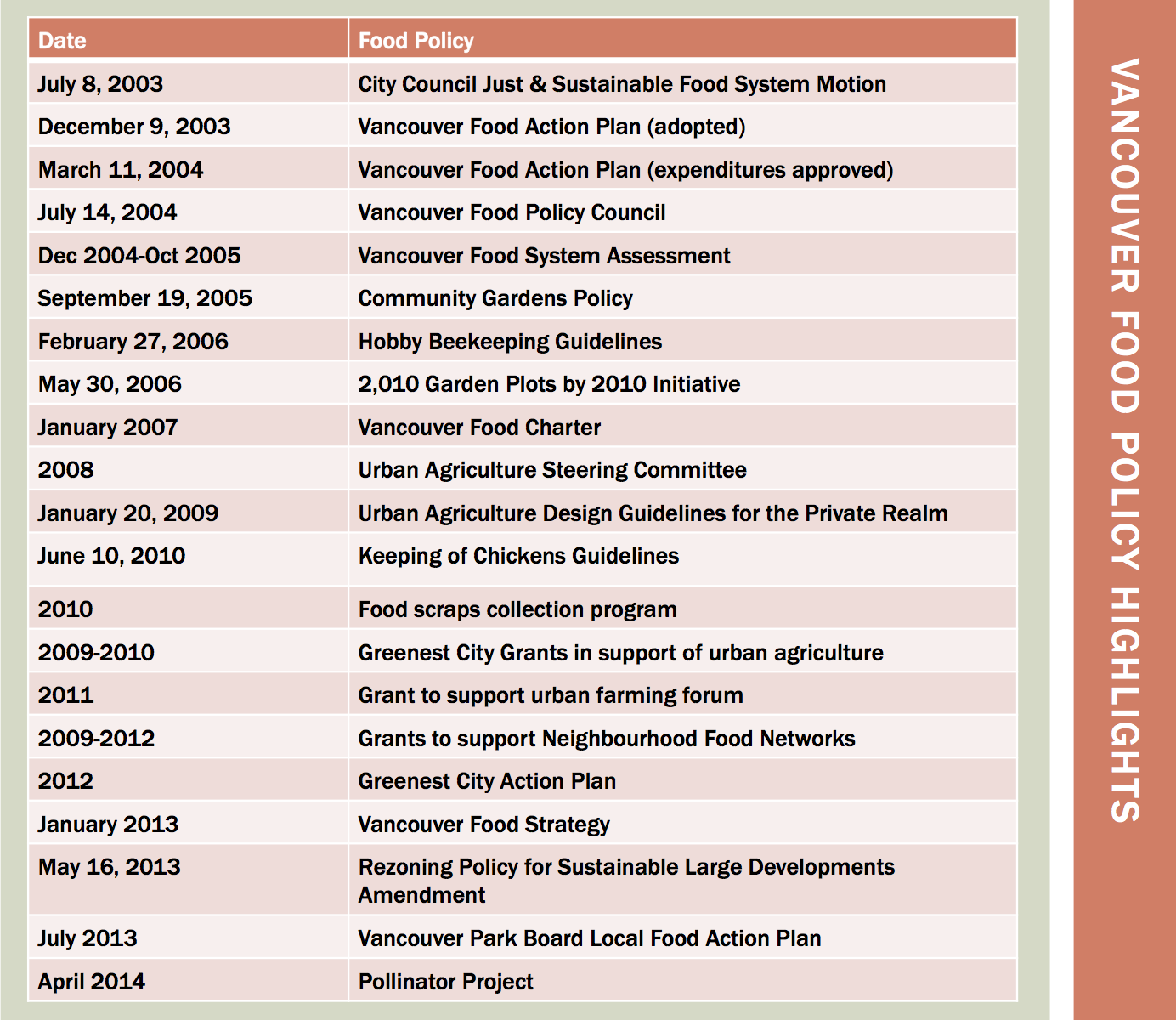
Vancouver Food Policy Highlights Graphic by Kimberley Hodgson
What do you enjoy about your work? As a planner, the most enjoyable part of working on the food policy and food systems planning portfolio has been the creativity of developing something brand new and working with colleagues in other city departments to help them understand how food policy and food systems work can add value to the work other departments are already doing. In the early days of the mandate, these conversations typically started with “we don’t do that”, or “we can’t do that”, or “it’s not in our mandate or job description.” This provided me the opportunity to be what Wayne Roberts calls a “policy entrepreneur”; to discuss how food systems fits into work that city colleagues are already doing and how it can add value to their work. For instance, the way that urban greening goals can be advanced by building community gardens. Or the way that policy objectives around community economic development and neighborhood revitalization are supported by local farmers markets. Or the way that landfills can be reduced by building organic waste separation stations in new multi-family buildings. These conversations were always exciting. I have always maintained that food is not a new city planning concern. It’s actually one of the most ancient of urban issues. I loved witnessing the light bulb go off, and my colleagues’ recognition that food systems issues are actually not new within the urban context, and are powerful catalysts for broader system change. I have found there is a very personal component to food policy work, because food touches everyone – within and outside local government. I also really enjoy working with the community, and helping them succeed. I have always recognized that the bulk of the heavy lifting goes on outside of local government. That’s really important to remember.
Similarly, what do you find challenging about your work? Within local government, keeping my spirits up when I run into challenges can be sometimes hard. However, I have really had many more positive than negative experiences. Yes, working for a bureaucracy can be challenging at times. A local government bureaucracy can be tough to navigate. It can also be difficult to respond to shifting mandates and political administrations. As a planner of any variety, we need to be able to pivot, adjust, and be prepared for a portfolio to lose support. However, this didn’t really happen to me. That said, there were definitely challenges over the course of 3 different administrations that held office while I was with the city; but I was able to weather those changes and respond as best I could to continue the food policy work. By the time the current administration came into power, they introduced a heavy hitting policy directive – the Greenest City Action Plan – that strongly supported the food systems agenda. This really changed the game of what we could achieve in a small period of time.
Another relatively new challenge in Vancouver is tension between different groups within the food movement. Initially, there was a sense of unification between non-governmental groups advocating for policy change. However, after notable successes were achieved in a relatively short period of time, disagreements began to manifest. It has been challenging to continue engaging stakeholders in a productive way, while acknowledging their differences. I see this as a natural part of the evolution of any movement, and the evolution of public policy, but it does require a new kind of sensitivity to differences in aspirations and objectives.
What areas of the food system do you focus on in your work? I work on issues from across the food system: food production, processing, access, distribution, waste, and what we call ‘system-wide’ issues. In some ways this has been unique, or at least it was in the early days when the default in food systems planning was usually urban agriculture or food access, not food systems as a whole. When the 2003 city council motion calling for a just and sustainable food system was passed, I guarantee that no one within the organization fully understood what that meant. The community provided them with that language. Despite a clear directive, there was still a tendency to isolate urban agriculture or food access issues. So advocating for a systems approach was challenging. In the early days of my food policy work, I spent a lot of time educating colleagues about food as a system, and about how the food system is connected to other urban systems. I think there’s now a much better understanding that we can’t plan a city’s various systems in isolation; we need to consider connections between transportation, housing, economic development, public space, etc. when planning in general, and definitely where food systems are concerned. By connecting food systems to housing development, community centers, daycare, green spaces and more, we create economies of scale that increase infrastructure and human capital.
Do you consider yourself a food systems planner? Why or why not? Yes and no. On the yes side, it has been a privilege to focus on food systems planning and policy for the past decade; however, I am a strong advocate for situating food systems within broader urban priorities. So, I would also say no. I am a planner with a specialization in urban food systems. This serves a dual purpose. In both my academic and practitioner related work, I have realized that the food system offers an incredible portal into other conversations and possibilities within cities that I would argue no other issue affords us. The food system is a conversation starter, an educator, and a topic that convenes people who wouldn’t normally talk to each other about building healthy and inclusive cities. I see food as part of a broader conversation. If you are a systems planner that wants to connect the dots and work within and across systems – you aren’t going to be one particular type of planner. Personally, I think we need planners who can think using a systems approach, and connect systems, including the food system.
How has your perception of food systems planning changed since you first entered the planning field? When I entered planning back in 2001, I didn’t know much about food systems planning, just urban agriculture – which is common. My perception is that although there is still a lot of work to do, the general move towards systems thinking in food policy, planning, and community organizing is definitely becoming more of the norm, which is really exciting. One thing that hasn’t changed much (or as much as I had hoped) is the friction between a sustainable food system model and a charitable food system model. This tension is philosophical and ideological – and complex to navigate. For planners working in the local government context, if we aren’t sensitive to these tensions, they can lead to decisions that compromise a shift away from charitable food system. It’s important as a planner to understand your sphere of influence and focus on what you can control, but then also to push hard on things that may not be within your direct purview, like poverty, living wage, social inequality and other structural root causes of food system challenges.
Do you have any advice for someone entering the food systems planning field? What makes you successful in your work? What skills do you use the most in your food systems planning related work? It is very important to be a well-rounded planner; and that comes from both my beliefs of where food systems fit within planning and local government work, but also a pragmatic caution. The position I had at the City of Vancouver focused 100% on urban food systems planning and policy. This type of position is exceedingly rare. If you are an aspiring food systems planner, make sure that you have many skills in your toolbox. Find out what excites you; be a systems thinker, identify where you think there is the most social value or public benefit, and gain knowledge and skills in those areas. This way you won’t be a single function planner, and you can use food systems expertise to multiply beneficial outcomes in related areas.
In terms of specific skills, persuasion and entrepreneurialism are essential. Where emerging issues like food systems planning are concerned, remember that you are selling an idea both within, and sometimes outside of local government. Also remember that as municipal planners, we need to uphold a certain level of neutrality on issues so the relationship to advocacy is a tricky one. Not every food system idea is necessarily a good one, or one that should prevail over other ideas or interests. If food systems planning is what you are working towards, you should enjoy putting yourself in a position where you are communicating an unfamiliar issue, at best, or contentious issue, at worst. Also, a genuine curiosity is important, as is the ability to be a good listener. Even when I am sitting across from my harshest food system critic, there is always some element of wisdom in the criticism and something to learn. We are doing new things, breaking new ground, experimenting, and taking calculated risks. If I want to create a farm on the roof of the building, I want to know why the engineers might be worried that the roof could collapse. It’s important to not be defensive in this work.
What do you wish you would have known before going to planning school? I didn’t go to planning school. My PhD is in urban geography. I was in the middle of my doctoral work when I started working for the City of Vancouver as a social planner. I was able to learn on the job, but also be more purposeful about who to connect with and what I needed to fill in terms of gaps in planning knowledge. As adjunct faculty in a post-secondary planning school, I have been exposed to planning theories similar to the theoretical approaches I learned as a urban geographer. I think a lot of practical and technical skills can be learned on the job; however planning theories and approaches are important to learn in school, especially those that relate to equity, power imbalances, and critical approaches to inclusive participation and engagement.
Faces of Food Systems Planning is a series of interviews with practicing planners from across North America who are engaging in food systems planning and policy work. This series is part of APA-FIG’s efforts to highlight food systems planning as an important planning topic. Click here for more information.


 APA FOOD