
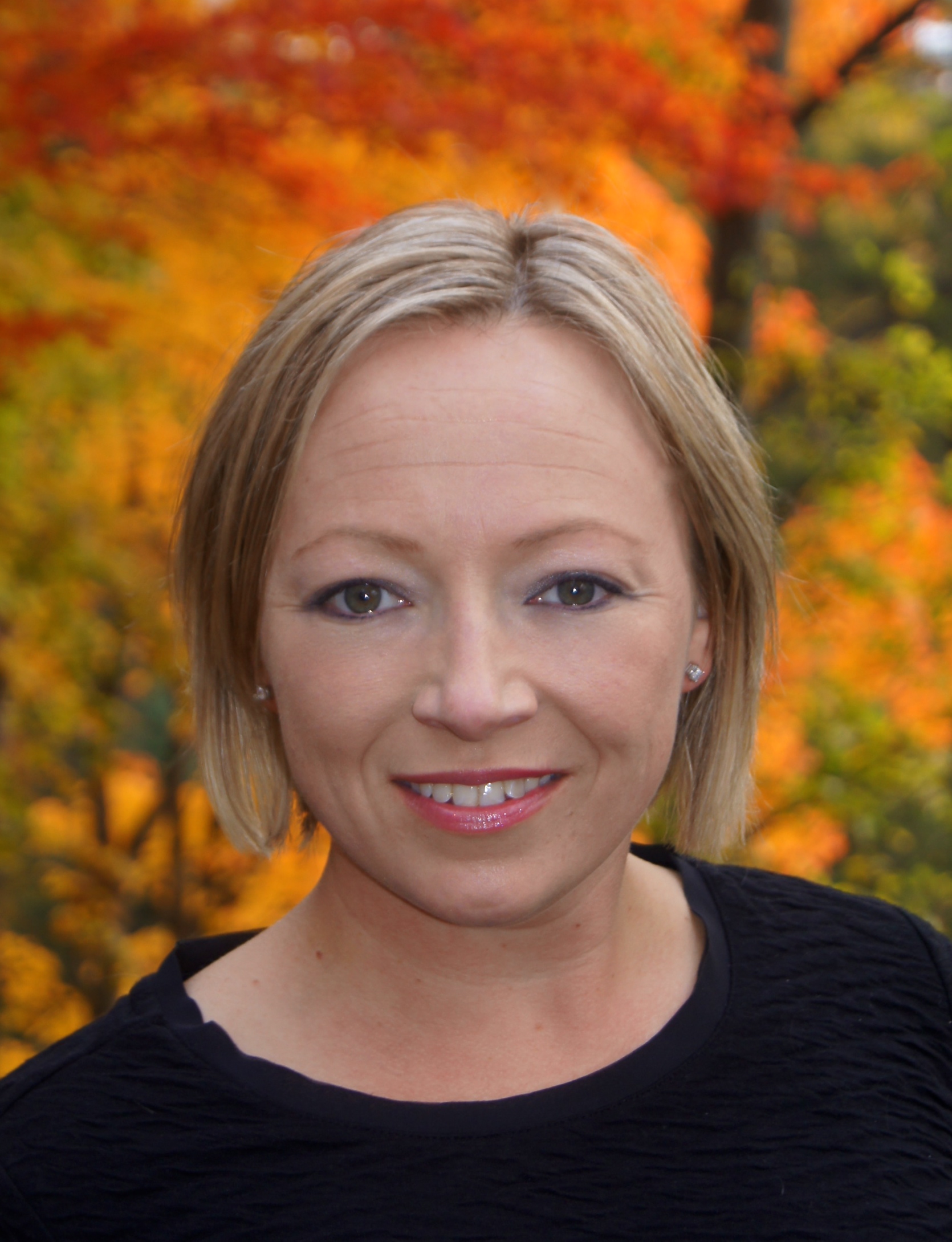
Faces of Food Systems Planning: Thyra Karlstrom

ThyraThyra Karlstrom is a senior planner for Marquette County, Michigan located in the Upper Peninsula (UP) near Lake Superior. Food systems planning has not always been part of her work, but in recent years she has been able to focus some of her time to work on food systems issues. Recently, she led the development of a comprehensive local food supply plan for the county, and is currently working on a meat processing feasibility assessment for the UP.

Kimberley Hodgson, Chair of APA-FIG, conducted this interview via email in October 2015.

  1. What is your first and last name? Thyra Karlstrom
  1. What is your current position? Senior Planner, Marquette County, Michigan
  1. How long have you held this position? I have worked for Marquette County for 8 years, and as Senior Planner for 1.5 years.
  1. What do you enjoy about your work? The diversity of projects, all of which share a common element- improving community. In addition to traditional county-level planning, the Marquette County Planning Division is also charged with managing a community development program, county forest and recreation facilities.
  1. Similarly, what do you find challenging about your work? The same thing I enjoy about work can also be a challenge. Having to shift in and out of topics that range from plan writing to managing a forest to balancing a recreation budget is a challenge.
  1. What areas of the food system do you focus on in your work? Mostly policy and education. My position as a county planner presents opportunities to share information and raise awareness of food systems with local municipalities. It is unusual for rural municipalities to have planning staff. It is common for a township supervisor to also serve as the zoning administrator, code official, etc. leaving no time to research and develop food systems policy.
  1. In the work that you perform, where does addressing food systems issues fit in? How has this changed over time? Addressing food systems issues fits into the traditional county-level planning work that I do. In 2013, a local food supply plan was adopted by the County’s planning commission and later by the county board. The Plan is a guiding document for our planning commission and planners to use and enables us to be active participants in addressing our community food system issues. On a routine basis, the county planning commission reviews proposed plans and regulations from local units within the county. One thing we look for is whether or not they are “local food friendly” and we offer suggestions for improvement. Over time, I believe our county government has taken a stronger role in addressing food systems issues. For example, the County is the lead applicant for a grant to study the feasibility of a USDA multiple species processing center(s) across the Upper Peninsula of Michigan.
  1. Do you consider yourself a food systems planner? Why or why not? I consider part of me a food systems planner, but that does not mean that this region is absent a food systems planner. A great characteristic about where I live, in the Upper Peninsula of Michigan, is the community’s ability to work in partnership – across municipalities, agencies, and sectors. Together, we combine our resources and achieve great things!
  1. What is the biggest food systems planning-related hurdle your community/organization faced in recent years and how was it dealt with? Navigating the Michigan Right to Farm Act (MRTFA) is a significant and on-going challenge as we try to strengthen our food systems. The MRTFA preempts local zoning regulation, but not always and there have been many court cases addressing this topic. It is hard for municipalities to create “local food friendly” regulations when there is a threat of litigation. We continue to monitor court cases, research what other municipalities are doing, and work on model zoning language for agriculture.
  1. How has your perception of food systems planning changed since you first entered the planning field? When I first entered the planning field well over 10 years ago, the term “food systems” was not on my radar. Through participation in Transition Marquette County and hearing Will Allen speak at the 2009 APA conference in Minneapolis, I was inspired to make “food systems” a common term in Marquette County. Components of a food system have always had a presence in planning activities, but today there is an increased awareness of how all of the components fit together and that now has an identity – “community food system”.
  1. Who has had the most influence on you as a planner? As a food systems planner? My planning advisor and professor during college, Steve DeGoosh. He is really a professor of community and has a talent to lead the community through discussion of tough subjects. My children motivate me to continue in the planning field, especially food systems planning. I want them to experience how food is grown and where it comes from and a strong community.
  1. Do you have any advice for someone entering the food systems planning field? What makes you successful in your work? What skills do you use the most in your food systems planning related work? The best advice that I can offer, and this extends beyond food systems planning, is to know your audience. A great idea can be snuffed out quickly if your audience feels alienated. It is also important to trust your ideas and to just go for it sometimes. Be a student and a team member-learn from others and provide support where you can.

Faces of Food Systems Planning is a series of interviews with practicing planners from across North America who are engaging in food systems planning and policy work. This series is part of APA-FIG’s efforts to highlight food systems planning as an important planning topic. Click here for more information.
RFQP: Upper Peninsula Multi-Species Processing Feasibility Study

The Upper Peninsula Multi-species Processing Feasibility Study Project is a cooperative venture between several stakeholders including Marquette County, Upper Peninsula Food Exchange, Farm Bureau, and regional planning organizations.

MDARD awarded Marquette County an $127,300 Strategic Growth Initiative (SGI) grant aimed to address the lack of USDA multi-species processing in the Upper Peninsula. The grant will be managed and administered by the County of Marquette with a substantial portion of it to be used to fund a study to assess the feasibility of an USDA inspected multi-species processing facility(s) in the Upper Peninsula.

As part of this process, Marquette County is issuing this Request For Qualifications & Proposals (RFQP) from qualified firms to conduct a substantial portion of the work scope of MDARD SGI Grant. The deadline for proposals is December 10, 2015.

For more information and to learn how to submit a proposal, click here.

Call for Proposals: National Farm to Cafeteria Conference, June 2-4, 2016, Madison, WI

NFC

Save the date for the 8th National Farm to Cafeteria Conference, a biennial event hosted by the National Farm to School Network that will convene more than 1,500 people working to source local food for institutional cafeterias and foster a culture of food and agricultural literacy across America.

Cafeterias in schools, childcare centers, universities, prisons and hospitals serve more than 40 million Americans every day, placing the farm to cafeteria movement at the forefront of the fight to end obesity and strengthen local food systems. The National Farm to Cafeteria Conference is the only national gathering of stakeholders from across this movement, making it the premiere opportunity to learn, network and collaborate with likeminded leaders from across the country. Registration will open Feb. 15, 2016.

Do you have expertise to share? NFC is seeking workshop, poster and lightning talk proposals from individuals and organizations working to improve our food system, strengthen community health, empower youth, build equity and increase opportunities for farmers. The Request for Proposals (RFP) is open now through Dec. 4, 2015.

Learn more here. 

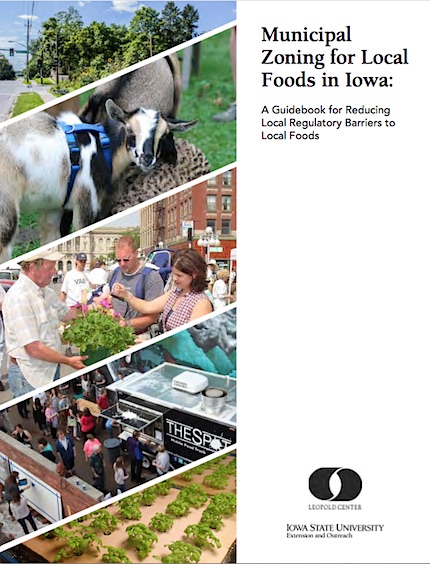
Municipal Zoning for Local Foods in Iowa

lcsaMunicipalities in Iowa and across the nation are increasingly recognizing the multiple benefits of urban agriculture; however, zoning regulations can unintentionally impede urban agriculture. To respond to this challenge the Leopold Center for Sustainable Agriculture at Iowa State University funded Gary Taylor and Andrea Vaage to develop the Municipal Zoning for Local Foods in Iowa guidebook. The guidebook provides science-based guidance and sample zoning code language designed to reduce the barriers to, and promote production and sales activities commonly associated with urban agriculture.  Although written for Iowa, the guidebook contains practical information and code language applicable to any local jurisdiction.

The guidebook addresses the following common urban agriculture uses: aquaculture, bees, chickens, goats, front-yard gardens, community and market gardens, gardening on vacant lots, urban farms, season extenders, composting, Community Supported Agriculture (CSA) drop-sites, farm stands, farmers markets, food trucks and pushcarts, and urban agriculture districts.  Each chapter provides a general description of the activity, and the science-based information on standards and best practices associated with the activity; the public health, safety and welfare concerns commonly associated with the activity; a summary of the commonalities found among municipalities’ codes; and sample code language taken from municipalities that vary both in size and location.

For more information, click here.

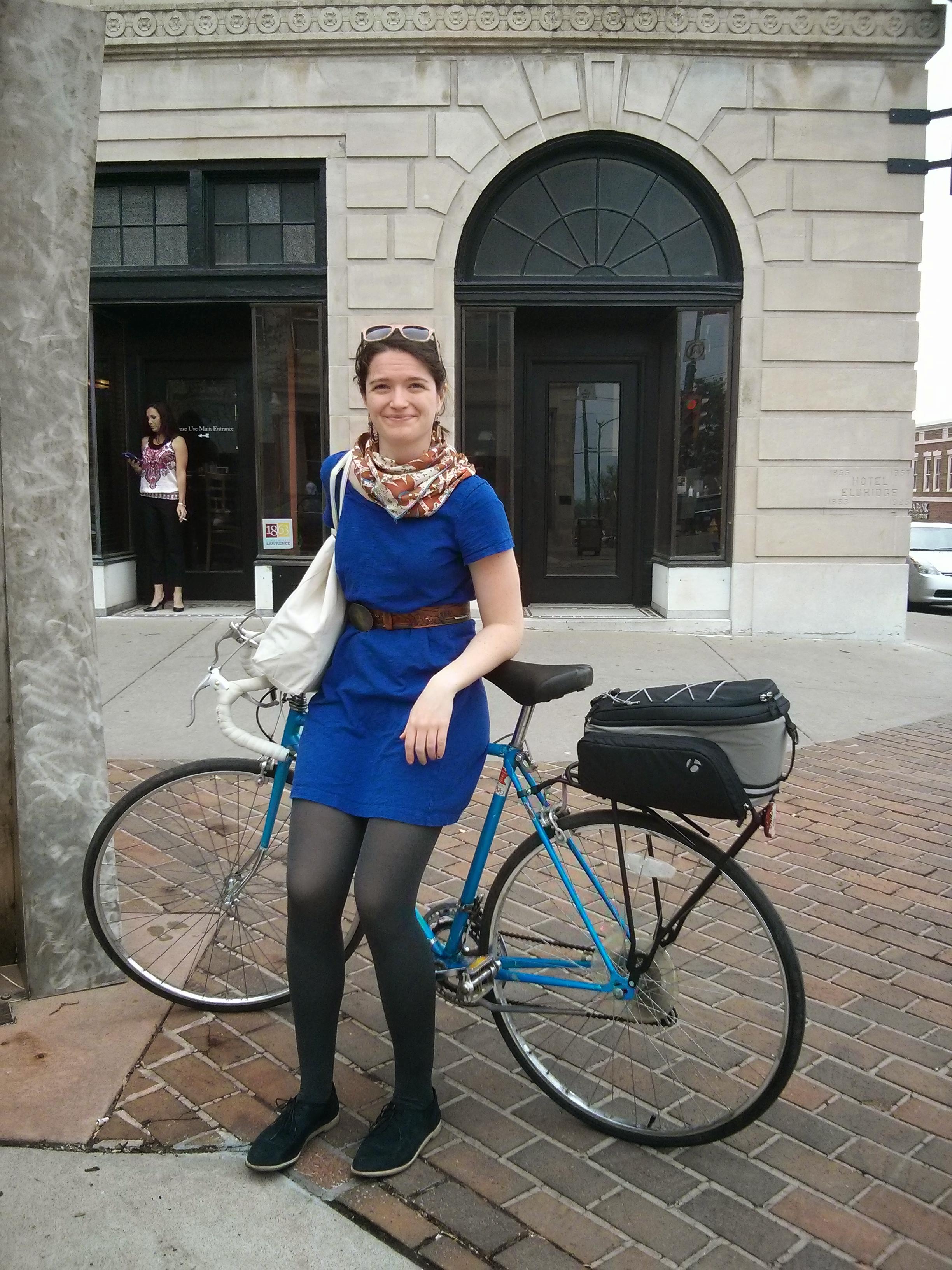
Faces of Food Systems Planning: Helen Schnoes

IMG_20150412_170915Helen Schnoes is the Food Systems Coordinator for Douglas County, Kansas. As a recent graduate of planning school, and a recent hire occupying a newly created position, Helen provides a unique perspective on defining her food systems planning work. Her work focuses on a variety of local food system development initiatives, including food hubs, farmers markets, farm to school, food policy council support, and food system assessment. She is also an active member of APA-FIG’s Policy Working Group.

To learn more about the innovative food systems planning and policy work of Lawrence and Douglas County, click here.

Kimberley Hodgson, Chair of APA-FIG, conducted this interview via email in October 2015.

  1. What is your first and last name? Helen Schnoes
  2. What is your current position? Food Systems Coordinator, Douglas County, KS
  3. How long have you held this position? Since April, 2015
  4. What do you enjoy about your work? I enjoy working with a wide range of people throughout the community, and the chance to balance an appreciation for the local context with bringing new ideas to the table and learning from the work happening elsewhere. I get to staff our food policy council, a group of 23 stakeholders who advise our county and city commissions on food systems issues. It has also been rewarding to provide a supporting role to increase public input into policy change–and learn on the ground about the technical details of these processes/policies at the same time.
  5. Similarly, what do you find challenging about your work? Defining what it is! With just under 6 months at this job, I’ve learned a lot, but am still figuring out how to define the “scope” of what I’m doing. As a new role in county government, I talk a lot with my boss about what our place in the community is to support local food development and community health–and what “food systems” issues we can actually meaningfully address at the local scale. Recently, figuring out how to frame issues, especially how food “connects” issues beyond its materiality, has been on my mind. There’s a lot of powerful writing and thinking nationally about food issues and planning–but translating that into practical, on the ground action is an intellectual and professional challenge–though quite an exciting one to have the chance to tackle! On a practical level, too, I’m in a grant-funded position, so its tenure is limited in its initial composition, and dependent upon Congress. (But we are thinking about future options.)
  6. What areas of the food system do you focus on in your work? It’s a mix: Local food system development, including food hub creation and fostering wholesale opportunities for small-scale farmers; supporting farmers markets; farm to school purchasing processes; food policy council support/facilitation; communications and public messaging, including a focus on health; local food system assessment (across sectors) and planning.
  7. In the work that you perform, where does addressing food systems issues fit in? How has this changed over time? It’s everywhere! My role is funded by a Centers for Disease Control and Prevention (CDC) grant our health department received, so some of my key priorities are guided by that (wholesale local food purchasing, including farm to school and public promotion for local, healthy foods). But that work is also closely tied to other opportunities that arise in the community–including the food plan that the steering committee leading our comprehensive plan update tasked the food policy council to create for the next year, and the revision to our local urban agriculture policies, which the city commission tasked Planning with this summer. I’ve helped with public outreach and draft review.
  8. Do you consider yourself a food systems planner? Why or why not? With just over a year since completing my planning master’s degree, I do find that the planning lens really influences how I think about the work and how I see myself relating to the various stakeholders and community members I engage with. Attending the national APA conference in Seattle and participating with APA-FIG further help me maintain this identification with food systems planning even though some of my days are not as closely related to “planning,” per se. The chance over the coming months to help create a local food plan and update our food system assessment, however, present an exciting opportunity to really delve into food systems planning and, hopefully, anchor it locally in our long-range planning and policy priorities.
  9. What is the biggest food systems planning-related hurdle your community/organization faced in recent years and how was it dealt with? When our first food system assessment was conducted over five years ago, after our food policy council formed, the report pointed to local food infrastructure and food security as key areas needing attention. This has guided a lot of work since then, including creating a community garden program on city land, receiving a USDA grant to conduct an in-depth feasibility study and farmer/buyer outreach about building a regional food hub, and creating a matching program for SNAP at Farmers Markets–launched by and still partially-funded by local government. Since arriving this past April, I’m working with the core group of farmers leading the formation of the food hub and we worked with them to apply for additional USDA funds to help launch their aggregation business. Our Chamber is working with them to disburse other start-up funds our food policy council received to support the effort. Now that we’re launching an update of that first food system assessment, we’re talking about how we can integrate labor concerns, river environmental health, and even housing affordability to continue pushing how we (and our leaders) understand and address food security. Both local food aggregation (and growing the production/viability of small-scale farmers), especially in Kansas, and food security are long-term issues with many non-local influences. However, I’ve been impressed by the continued energy in this community to maintain commitment to these efforts.
  10. How has your perception of food systems planning changed since you first entered the planning field? Not a lot of people know what food systems planning is! (Although I do think my mom gets it now.) I’m still working on how to simply talk about the type of work I’m doing. However, as a young professional, I’m very excited to be entering the planning field at this time that food systems issues really are further establishing themselves within the profession. The question of scale is also very clear in my mind since taking a job in local government, and how influential state and regional dynamics can be–yet at times beyond our immediate sphere of action for the majority of our work. But, this intrigues me to continue thinking about alternative approaches, opportunities for coordination and collaboration, etc. Also: There’s often an urban (big city urban) bias to a lot of “national” conversations about food planning.
  11. Who has had the most influence on you as a planner? As a food systems planner? I like to tell people that I chose to attend Cornell for my planning degree as much for its location in Ithaca, NY, given its strong local food scene, and its standing as a land grant university with cooperative extension, as any of its “prestige.” There were so many people there that contributed to how I think about food systems and planning: Mildred Warner was an amazing (and demanding) advisor, and John Forester imbued an important level of self-awareness about the process and place of planners. I had the great fortune to overlap in my two years there with Becca Jablonski, and meet others she works with, including Ken Meter. I have a handful of peers who also pursued their own food systems planning focus and we bonded over our shared commitment to this area that many of our classmates rarely even knew existed (at first). My program also encouraged us to take courses outside of planning, so leveraging law, business, development sociology, agricultural economics, and natural resource courses provided a breadth of perspectives about issues central to food systems work. Volunteering with a community local food networking group and interning with Martha Armstrong at Tompkins County Area Development in Ithaca were very formative and helped get a bit of reality to balance my coursework “up on the hill.” From my volunteering I met Jeanne Lecesse, who now with Growing Food Connections, has provided helpful guidance about being a young planner on the job market interested in food systems. My food systems work is also very much shaped by two summers in Sitka, Alaska, and subsequent work with Nic Mink to research wild salmon and help launch Sitka Salmon Shares, a sustainable wild seafood business built upon the community supported fishery model, adapted for Midwestern consumers. Since graduate school, I’ve had the opportunity to intern with the Sustainable Farming Association of Minnesota and work with the Minnesota Institute for Sustainable Agriculture–two pioneering groups in my home state who have worked for decades to build capacity and connections that have significantly impacted small- and medium-scale agriculture and the state’s local food system. I draw from all of these experiences for my current work.
  12. Do you have any advice for someone entering the food systems planning field? What makes you successful in your work? What skills do you use the most in your food systems planning related work? I feel I could still gain much from what others answer when asked these questions! That said, I am a strong believer in always following your passions, putting yourself out there for different opportunities (some will be dead ends, others will work out), and having a driving curiosity mixed with entrepreneurial spirit. Find people who inspire you and from whom you can learn, and ask questions. (I’m currently reading Food for City Building by Wayne Roberts and think that’s a pretty accessible and over-arching primer for thinking about this type of work, though of course context-specific to Toronto.) The ability to think critically/creatively and make connections (with people, across issues) is really important in the rather nebulous realm of food systems planning. Take an optimistic perspective, most of the time. A lot of this work comes down to communication with others, building relationships, and thinking strategically of both the short and long term. Synthesizing information and tailoring arguments for different audiences is important. Be humble and listen. I’m hoping to build my more technical skills regarding specific policy interventions, financing options, public facilitation processes, etc. Though I don’t use it, I appreciate that I persevered through a GIS course to understand data analysis and presentation better, and how to utilize it as needed. Being able to conduct meaningful evaluation is also important. I’ve done quite a bit with Survey Monkey, for example, and benefited from exposure to survey design while in school, as well as use of Excel for basic analysis and presentation. Related–knowing where to go for other examples of food systems work, data sets, etc. is helpful and something to continually develop. (And, luckily, FIG and GFC are working on this!) I personally think there’s an under-appreciated importance for food as culture and the power of stories. I reflect on this quite a bit, even though I don’t often utilize it in my day-to-day work so far. Gravy, a podcast by the Southern Foodways Alliance, is excellent on this front and one of my favorite things right now.
  13. What do you wish you would have known before going to planning school? Knowing more about local government, its processes and financial aspects, though varied across place, could have provided a richer foundation for a lot of our planning discussions. Despite getting pretty advanced with math in high school and college, I hadn’t had a statistics course until grad school, and it was a WHIRLWIND from which I learned a lot, but would have probably gotten more out of, and better leverage now, with additional coursework. When I wrote my application for planning school, I actually said that I wanted to enter the program not to be a planner, but to gain the tools of the planner to influence food systems change. However, I now have deepened my appreciation for the larger field of planning, and value that professional identity much more than I anticipated I would three years ago. So, I’m probably the opposite of a lot of planners–where I’m the food systems girl who’s enjoyed expanding my perspective through planning, instead of the planner who’s beginning to integrate a food systems perspective.

Faces of Food Systems Planning is a series of interviews with practicing planners from across North America who are engaging in food systems planning and policy work. This series is part of APA-FIG’s efforts to highlight food systems planning as an important planning topic. Click here for more information.
Faces of Food Systems Planning: Robert Brown

Bob Head Shot July 31 B - 2015 CROPRobert (Bob) Brown is the former director of city planning for the City of Cleveland and the newly appointed interim executive director of MidTown Cleveland, Inc. As Cleveland’s planning director, Bob was instrumental in developing some of the most innovative and progressive urban agriculture zoning regulations in the U.S. These regulations paved the way for allowing urban agriculture – both commercial and non-commercial – to flourish throughout the city.

Kimberley Hodgson, Chair of APA-FIG, conducted this interview via email in October 2015.

  1. What is your first and last name? Robert N. Brown, FAICP
  2. What is your current (or most recent) position? Director of City Planning for the City of Cleveland (retired May 2014); Interim Executive Director of MidTown Cleveland, Inc. (current)
  3. How long did you hold this position? I was at the Cleveland City Planning Commission for nearly 30 years and was Director for nearly 10 years. I have been at MidTown Cleveland for just 2 months.
  4. What did you enjoy about your work? I love cities and I love city planning, so my work is a perfect fit.  I enjoy coming up with creative solutions to problems in a way that betters the community.
  5. Similarly, what did you find challenging about your work? The most challenging aspects of my work as a city planner include the slow pace of change, the persistence of key problems (like poverty and housing deterioration), and the lack of funds to address key issues.
  6. What areas of the food system did you focus on in your work? Updating zoning regulations to permit expanded urban agriculture and making City-owned land available for urban agriculture.
  7. In the work that you performed, where did addressing food systems issues fit in? How did that change over time? Food systems planning was not a part of my work until late in my career – the past several years.  It had become a significant part of my work in the past several years.
  8. Do you consider yourself a food systems planner? Why or why not? Food systems planning was a small (but important) part of my job as a generalist city planner.
  9. What is the biggest food systems planning-related hurdle your community/organization faced in recent years and how was it dealt with? From my limited role, the biggest hurdles we faced were removing obstacles from the zoning code that prevented the use of vacant land for exclusive use as farming and prevented the use of most land for raising chickens and keeping bees, as well as selling produce from residentially zoned property. We successfully overcame these obstacles.
  10. How has your perception of food systems planning changed since you first entered the planning field? I have realized the importance of urban farming for several reasons including:  productive use of otherwise “vacated” land, improved nutrition for some city residents, and as a community-building activity that brings neighbors together both for the farming activities and for the farmers’ markets.
  11. Who has had the most influence on you as a planner? As a food systems planner? As a planner, I was influenced most by Jane Jacobs and by local Cleveland City Planning Directors, Norm Krumholz and Hunter Morrison.  In my limited role as a food systems planner, I was most influenced by Morgan Taggart through her former work at Ohio Extension.
  12. Do you have any advice for someone entering the food systems planning field? What makes you successful in your work? What skills do you use the most in your food systems planning related work? I would advise a person entering the field to learn about the realities and the challenges of urban food systems planning, including the financial issues associated with small-scale farming operations and the issues regarding environmental contamination.
  13. What do you wish you would have known before going to planning school? My planning career could have benefited by more knowledge of real estate and development financing.

Faces of Food Systems Planning is a series of interviews with practicing planners from across North America who are engaging in food systems planning and policy work. This series is part of APA-FIG’s efforts to highlight food systems planning as an important planning topic. Click here for more information.

Kresge Foundation Launches Food-Oriented Grant Opportunity

This week Kresge Foundation announced a new initiative – “Fresh, Local & Equitable: Food as a Creative Platform for Neighborhood Revitalization.” They will award up to 20 planning grants of up to $75,000 each in the first quarter of 2016. Planning grants “may support project management, partnership development, community engagement, strategic communications, evaluation, policy development and other activities directly related to successful outcomes.” Grant funds may not be used for capital construction costs, real estate acquisition or the purchase of major equipment.

Proposals are due by 5:00 p.m. Eastern on Monday, December 14. To learn more about the initiative and the request for proposal, click here.

Massachusetts Completes Local Food Action Plan

MFACNew Logo Wide

Just as the American Planning Association kicks off its November celebrations of food system planning, Massachusetts is celebrating the completion of its draft Local Food Action Plan – a plan that seeks to strengthen Massachusetts local food system – from farm to sea, and from producer to consumer.

The impetus for creating a comprehensive food system plan came from the Massachusetts Food Policy Council (FPC) that recognized the importance of developing a unified vision and coordinated strategy for strengthening the local food system. The FPC named a planning team[1] to lead the nearly two-year planning process. During the planning process nearly 1,500 food system professionals, advocates, and eaters helped identify ways to improve the local food system – including reforming regulations, improving worker conditions and wages, expanding programs that double food dollars for low income individuals, strengthening local food distribution to schools and hospitals, and building markets for lesser known seafood caught in Massachusetts.

Shaped through broadly representative input, the draft Local Food Action Plan now lays out overarching goals to increase the amount of food grown and seafood caught in the state, support jobs and business opportunities in the entire food supply chain, encourage stewardship and sustainable use of land, water and other natural resources important in food production, ensure local foods are available and affordable to Massachusetts resident and consumers, and decrease food waste and turn what food waste is produced into energy and compost to build soils. For each of these goals, the Massachusetts Local Food Action Plan spells out in detail how they should be achieved – what actions need to be taken by legislators, state agencies, community organizations, businesses, and residents to reach these goals.

As the Massachusetts Local Food Action Plan is finalized, the work will begin to make the vision for a stronger local food system a reality. Taking action to improve the local food system will involve ongoing and expanded collaboration among the committed network of food system advocates, and it will also include reaching across state boundaries, and engaging New England states also working toward food system change.

Sign up and become part of our network! And learn more about the Massachusetts Local Food Action Plan by going to www.mafoodplan.org.


About the Author. Heidi Stucker is a Food System Planner for the Metropolitan Area Planning Council in Boston, Massachusetts.

[1] The planning team that facilitated the Massachusetts Local Food Action Plan process included the Metropolitan Area Planning Council as lead, with partners Pioneer Valley Planning Commission, Franklin Regional Council of Governments, and the Massachusetts Workforce Alliance.

Faces of Food Systems Planning: Heidi Stucker

March 10, 2015. Boston, MA. The Metropolitan Planning Council staff photos. © 2015 Marilyn Humphries

March 10, 2015. Boston, MA.
The Metropolitan Planning Council staff photos.
© 2015 Marilyn Humphries

Heidi Stucker is a Food System Planner for the Metropolitan Area Planning Council in Boston, Massachusetts. She has held this position for 1.5 years.

Erica Campbell, member of the APA-FIG Leadership Committee and Coordinator of the APA-FIG Policy Working Group, conducted this interview in October 2015.

What do you enjoy about your work?

As a food system planner, I most enjoy the process of facilitating conversations between stakeholders that conclude with all contributors having a far more nuanced understanding of the food system, and what strategies are most important and practicable. To adequately understand the issues present in the food system, and to develop strategies for addressing those issues, it’s important to bring together a range of individuals and stakeholders to identify the leverage points for food systems improvements. Stakeholders include a range of people with varying perspectives to offer – consumers, food producers, supply chain workers and managers, advocacy groups, policy makers and legislators, and others.

What areas of the food system do you focus on in your work?

I am working on state food policy efforts as well as multi-municipality projects on healthy food programming in grocery stores and neighborhood markets. I am also helping develop ideas for future projects at my agency that address food waste management and local food distribution to school districts in our service region. I am a lead planner on the Massachusetts Food System Plan. This planning process, which has been ongoing for over one and a half years has focused broadly on all aspects of the food supply chain. Through convening a range of food system experts and stakeholders – from fishermen to farmers, researchers to legislators, advocates to activists – the process has led to the development of food policy recommendations that advance the local food system and contribute to achieving goals for increasing local food production and catches, improving business and job opportunities, improving the availability and affordability of local foods, and conserving and ensuring responsible stewardship of natural resources in food production.

I am also a contributing planner to a project that is partnering with a cluster of municipalities north of Boston to improve healthy food access in the cities and towns. The project team is working with neighborhood market owners to develop a business association that would enable identifying and addressing issues unique to smaller food and convenience stores, including improving healthy food distribution. The team is also working with grocery stores to pilot a healthy check out aisle.

In the work that you perform, where does addressing food systems issues fit in? How has this changed over time?

I address food system issues as a central component to my work. Over half of my time is committed to food system-related projects. Over time, I have taken on additional work in climate change adaptation planning.

Do you consider yourself a food systems planner? Why or why not?

I do consider myself a food system planner. This is a central component of my work and expertise.

What is the biggest food systems planning-related hurdle your community/organization faced in recent years and how was it dealt with?

One of the greatest challenges our planning team has faced in the process of developing a state food system plan has been to ensure a process that is representative of a diversity of stakeholders. Through our efforts we had regular input from over 300 people, and outreached to over 1500 people. Those that joined discussions were representative of all parts of the food system, and included researchers, practitioners, industry professionals, advocates, and others. Despite our great successes in developing ongoing relationships with a range of individuals that provided valuable insight into the issues and priority areas for improving our local food system, we had difficulty engaging a few groups of individuals, including those working in the food system – farmers, fishermen, food service workers, those representing mid- and larger- food production and distribution companies, and constituents of community based organizations. While these stakeholders were underrepresented in the larger group conversations, perhaps because of time and financial constraints, we remedied this by deliberately reaching out to these groups to better understand their concerns and ideas, and integrated their feedback into the shaping of the food system plan.

How has your perception of food systems planning changed since you first entered the planning field?

Prior to studying food system planning, I had been engaged in food system work in Massachusetts for seven years, and in that time I had observed that increasingly consumers, businesses, community organizations, and others were using food as starting point for talking about a whole range of issues – from the challenges faced by farmers and fishermen to have secure livelihoods, to the prevalence of diet-related health issues experienced by communities of color as symptomatic of systemic issues that resulted from years of racism and disinvestment in these communities.

At the time when I started my masters program there were a handful of examples nationally where cities, regions, and in some cases, states had begun prioritizing food system work, identifying strategies for addressing issues related to farming, food access, food supply chains, and others. As a budding practitioner in the field, I was excited to be a part of an emerging field, hopeful that the field would continue to grow, and intrigued to see whether the field would develop into an independent discipline within the urban planning field, or if it would be integrated into existing disciplines of the field. As it turns out, the answer is, both.

Today, food system planning is emerging as a unique and independent discipline of urban and regional planning, and it is also being integrated by other planning fields – economic development, public health, energy, environmental, transportation, and others. These planning fields are making food system advancements through projects that focus on topics like workforce and business development in the food system, developing solutions for food waste, agricultural preservation and conservation, improving food access through improved transportation systems, and others.

Do you have any advice for someone entering the food systems planning field? What makes you successful in your work? What skills do you use the most in your food systems planning related work?

Food system planning connects to nearly all fields within urban and regional planning. It is crosscutting in a way that few other areas of the field are. Furthermore, it is engaging; everyone eats and enjoys food. Beginning conversations with food can open up dialogue about a range of topics: social justice, ecological stewardship, and economic prosperity.

For an individual entering the field of food system planning, I would urge her to gain a firm understanding of the ways food systems connects to a range of issues. In opening conversation with communities about their food systems, help to make those connections and encourage examining issues from several angles, so that strategies shaped for strengthening food systems can be thoughtfully informed.

Further, food system planning is still in its early stages, and there is great diversity in how people are approaching it. In practicing as a food system planner at this time, you will be contributing to and shaping how food system planning is done. Valuable groundwork has already been laid. Do your research, and look at how others have approached food system planning – on a range of governmental levels. Let others’ work inform your food planning, and integrate these practices into your approach, as it makes sense for the context you are working in.


Faces of Food Systems Planning is a series of interviews with practicing planners from across North America who are engaging in food systems planning and policy work. This series is part of APA-FIG’s efforts to highlight food systems planning as an important planning topic. Click here for more information.

Job Opening: Community Food Council for Del Norte County and Adjacent Tribal Lands – Food Program Director

The Food Program Director (Director) works with the Food Council, staff, and volunteers to meet goals set by the Food Council and the grant work plan. The Director is expected to work with a high degree of independence and reports to the BHC Initiative Manager; meets with the BHC Program Team twice a month; and meets with the Food Program Advisory Team on a monthly basis. The Director is responsible for overall administration of the Food Council and BHC food work:
– Leads program strategy development and implementation;
– Integrates both community and funder priorities into program strategy;
– Oversees project budget in conjunction with First 5 staff;
– Builds the leadership and capacity of Food Council members and the community to make positive food system change;
– Collaborates and builds relationships with Food Council members, community groups, organizations, local and tribal governments on policy and system change to create an equitable, healthy food system;
– Creates content for social media and other platforms;
– Plans community events;
– Supervises staff and volunteers;
– Identifies additional resources and funding for the program; and
– Other duties as needed

For more information: http://www.dnatlfood.com/