- The South Carolina Policy Coordinator is a full-time, salaried position (40 hours/week) with the Carolina Farm Stewardship Association (CFSA). The position is based in Columbia, SC. The SC Policy Coordinator works as part of the Policy Team to advocate for state policies that better support local food, organic farming, and resilient regional food systems.
About CFSA
Carolina Farm Stewardship Association (CFSA) is a member based 501(c)(3) non- profit organization that helps people grow and eat local, organic food by advocating for fair farm and food policies, building the systems that organic family farms need to thrive, and educating communities about local, organic farming. We support farming and food that is good for consumers, good for farmers and farm workers, and good for the land.JOB SUMMARY:
The SC Policy Coordinator works in collaboration with the Policy Director, other CFSA staff, and partner organizations to influence the South Carolina General Assembly, state-level administrative agencies, and land-grant universities on issues of importance to local and organic food and farming in South Carolina. Specific responsibilities include assisting in the development of state level advocacy goals, advocating for specific policy solutions to achieve those goals, educating state (and occasionally federal) policy-makers on issues of importance to the local and organic food and farming community, and organizing and overseeing grassroots communications campaigns in support of CFSA’s policy goals.The work will primarily take place remotely in Columbia, SC. CFSA’s main office is located in Pittsboro, NC.
The SC Policy Coordinator reports to the Policy Director.
JOB RESPONSIBILITIES:
STATE POLICY (80%):
• Engage CFSA members and stakeholder communities in developing policy priorities and grassroots campaigns for South Carolina.
• Develop legislative and regulatory proposals and strategies to advance CFSA’s advocacy priorities, and implement strategies to influence legislative and regulatory processes.
• Educate state legislators and their staff and administrative agency personnel regarding CFSA’s advocacy priorities.
• Monitor state legislative developments and organize CFSA grassroots and grasstops responses to issues relevant to CFSA’s policy priorities and overall mission.
• Follow SC news related to food and farming policy, and assist with the development of a monthly e-newsletter compiling policy news for CFSA’s members.
• Coordinate grassroots campaign implementation with CFSA’s Community Mobilizer and partner organizations.
• Coordinate media (traditional and social) outreach, in conjunction with CFSA communications staff and partner organizations, in support of policy campaigns.
• Influence administrators of agriculture programs at SC’s land-grant university to increase resources allocated to organic agriculture research and education.
• Establish and maintain relationships with other academic institutions that are supportive of local, organic food system development.
• Achieve policy wins that advance CFSA’s mission and advocacy priorities.COMMUNITY ENGAGEMENT (10%)
• Provide resources and guidance to local communities (such as food councils, extension offices, community development agencies) to successfully develop and implement policies to promote local food economies, stewardship of agricultural resources, and healthy diets.
• Coordinate with regional and community-based partners to implement local policy campaigns
• Collaborate with allied organizations to offer grassroots leadership development programs.
• Support and strengthen CFSA’s community mobilization network.OUTREACH AND ADMINISTRATION (10%):
• Increase awareness and visibility of CFSA’s advocacy work, by giving presentations, accepting speaking engagements, and conducting general outreach.
• Represent CFSA at meetings and events held by allied organizations and stakeholders.
• Identify and pursue opportunities to expand CFSA membership and ensure member satisfaction.
• Identify and pursue, in conjunction with other CFSA staff, funding opportunities to support policy initiatives.
• Participate in work planning with the Policy Team on an annual basis, and in weekly meetings of the Policy Team about ongoing work.
• Meet all certification and recordkeeping requirements placed on lobbyists by the state of South Carolina.
• Contribute to quarterly reports documenting the work of the Policy Team.POSITION REQUIREMENTS:
• Either a JD or master’s degree in public policy plus 3 years’professional experience, or five years’ professional experience. The required experience must include work on successful policy campaigns (local, state or federal) that engage diverse partners and communities in efforts to promote systemic change. Note that resumes that do not document the required number of years of policy advocacy experience will not be considered.
• Familiarity with the state legislative process and the role of administrative agencies in crafting policy.
• Demonstrated success working on policy campaigns targeting legislative or administrative policy makers.
• Experience engaging the public in grassroots policy action.
• Must be self-directed and capable of successful work outside of a traditional office structure.
• Proven ability to work well within a team, and with individuals, both internal and external, from diverse backgrounds.
• Excellent oral and written communication skills.
• Exceptional organization and time management ability, with proven ability to multitask, and consistently meet or exceed deadlines and goals.
• Commitment to sustainable agriculture principles.
• Strong knowledgeable of food systems issues; knowledge of the Carolinas’ food systems preferred.
• Strong analytic skills, including ability to identify systemic problems and develop innovative solutions.
• Excellent interpersonal skills.CFSA offers a competitive non-profit sector salary in the low- to mid- $40K,
DOE, with generous vacation and retirement benefits as well as a monthly
fringe benefit to support the purchase of health insurance. CFSA is an equal
opportunity employer and encourages applications from women and people of
color.To apply, submit a resume, list of professional references and a cover letter
explaining why you want to work to promote local, organic agriculture to
apply@carolinafarmstewards.org with “SC Policy Coordinator” in the subject
line. You will receive electronic confirmation of your email submission. No
calls, please.Applications are due by August 1, 2016. The anticipated start date is October
1, 2016.
food policy
JOB OPENING: Food Systems & Health Analyst – Washington, DC
Food Systems and Health Analyst
Union of Concerned Scientists
Washington, DC
http://www.ucsusa.org/about/jobs-ucs#foodhealthanalyst
The Union of Concerned Scientists (UCS) seeks a skilled analyst to lend public health and health equity expertise to our multi-disciplinary Food and Environment team. We’re leading the call for a national food policy that ensures access to affordable, healthy food for all Americans; guarantees fair wages for millions of farm and food workers; and protects the nation’s farmland, air, water, and climate. As Food Systems and Health Analyst, you will design and carry out creative research leading to solutions for our nation’s food system, and communicate them to policy makers, allies, and the public. Come join our team and help us fix food!
JOB OPENING: City of Baltimore City Planner II
City Planner II list is currently opened (http://agency.governmentjobs.com/baltimorecity/default.cfm) until June 30, 2016. If you know anyone who has an interest and qualifies, please share this information.
When there are food access planner position openings anytime throughout this year, the city must refer to the city planner II list that is generated from this posting. Therefore, if you have any interest in working for department planning as a food access planner now or within the year, than apply now to be on the list- application due by June 30th. This is the list we will use throughout the year for any food access planner job openings.
No calls or emails please.
JOB OPENING: National Sustainable Agriculture Coalition Policy Director (Washington, DC)
The National Sustainable Agriculture Coalition (NSAC) seeks a passionate, highly experienced policy professional who will build upon the Coalition’s accomplishments over the past 28 years. The Coalition establishes and secures support and funding for dozens of policies and programs that promote conservation; foster family farm agriculture; build new value-added and regional food markets and businesses; protect food system integrity; and support sustainable and organic research, education and extension. The Policy Director shares in the leadership of the organization with the Managing Director.
More information available here.
JOB OPENING: City of Madison, WI Food Policy Coordinator
The City of Madison is hiring a Food Policy Coordinator. This position will direct food policy work for the City of Madison by providing leadership and strategic direction to policymakers and stakeholders including, but not limited to, policy development, coordination, implementation, and analysis. This position will also oversee several food-related programs and provide administration and analysis of the programs. The position will have an intense focus on increasing equitable access to healthy, affordable, and culturally appropriate food to all communities and developing polices that positively impact the health and well-being of all residents of the City of Madison and beyond.
See full position description here.
Apply for this position by June 23, 2016.
JOB OPENING: NYC Food Policy – Policy Advisor
The Office of the Food Policy director for New York City Food Policy is seeking a Policy Advisor to support the Office in all efforts to implement the administration’s food policy agenda and to accomplish the food policy goals laid out in OneNYC, The Plan for a Strong and Just City.
More information: http://www1.nyc.gov/site/foodpolicy/about/employment-and-internships.page
JOB OPENING: USDA Know Your Farmer Know Your Food – Ag Marketing Specialist
As part of the effort to institutionalize the work that has taken place during this administration on local and regional food systems at USDA, we are posting a *permanent, full-time position* that will be charged with coordinating the Department’s *Know Your Farmer, Know Your Food* initiative and shepherding work across USDA to support local and regional foods.
The job posting is available here:
https://www.usajobs.gov/GetJob/ViewDetails/437757500/
It is open to both current/former federal employees and those who have
never been employed in the federal government.
The window to submit applications is *only open until Monday (May 9).*
Exploring Stories of Food Systems Planning and Policy Innovation

Growing Food Connections is excited to announce the addition of 5 free publications to the Exploring Stories of Innovation series, a series of short articles that explore how local governments from across the United States are strengthening their community’s food system through planning and policy. These include:
- City of Burlington and Chittenden County, Vermont
- City of Cleveland, Ohio
- City of Minneapolis, Minnesota
- City of Lawrence and Douglas County, Kansas
- City of Philadelphia, Pennsylvania
Beginning in 2012, Growing Food Connections (GFC) conducted a national scan and identified 299 local governments across the United States that are developing and implementing a range of innovative plans, public programs, regulations, laws, financial investments and other policies to strengthen the food system. GFC conducted exploratory telephone interviews with 20 of these local governments. This series highlights some of the unique planning and policy strategies used by some of these urban and rural local governments to enhance community food security while ensuring sustainable and economically viable agriculture and food production. The first four articles in the series featured:
- City of Seattle, Washington
- Baltimore City, Maryland
- Cabarrus County, North Carolina
- Lancaster County, Pennsylvania
For more information and to download these free publications, visit http://growingfoodconnections.org/research/communities-of-innovation/.
Growing Food Connections is supported by Agriculture and Food Research initiative Competitive Grant no. 2012-68004-19894 from the USDA National Institute of Food and Agriculture.
Job Posting: Detroit Food Policy Council – Research and Policy Program Manager
The Detroit Food Policy Council is seeking a Program Manager to plan and implement the Council’s research and policy activities. This is a full time salaried position with flexible scheduling to accommodate required evening and weekend work. The full job description is below. To apply please send cover letter, resume, three references and a writing sample electronically to: info@detroitfoodpc.org with DFPC Program Manager Application in the subject line or via mail to: Detroit Food Policy Council, Attention: Hiring Manager, 1420 Washington Blvd., Ste. 230, Detroit, MI 48226. Only potential interviewees will be contacted. No phone calls please.
Food Well Alliance: Changing the Food System from the Ground Up
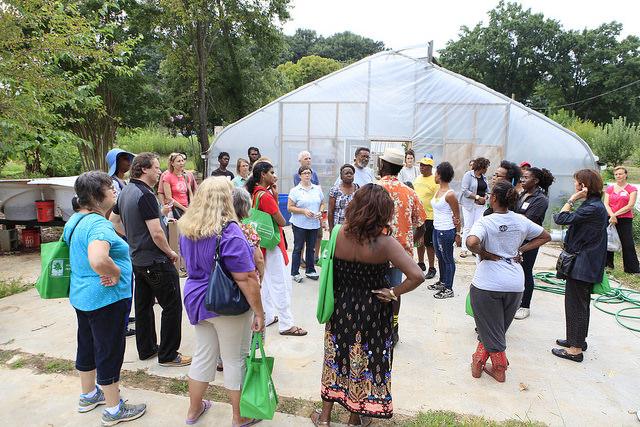
The Food Well Alliance is an Atlanta-based nonprofit organization formed in partnership with the Atlanta Community Food Bank (ACFB) that connects members of the local food movement around building healthier communities, strengthening the local food system and improving lives. The Alliance amplifies and accelerates metro Atlanta’s local food movement by hosting and organizing events, facilitating working groups and projects, making grants, and providing resources and information to the community at large.
Food Well Alliance serves three primary roles: to connect, to promote, and to mobilize. One of its main purposes is to create a space for nonprofits, community organizers, educators, entrepreneurs, and growers to learn about what others are doing around local food in Atlanta and how the community can align its efforts, identify challenges and barriers, and work collaboratively to strengthen the local food system. Food Well Alliance provides opportunity to use the collective impact model to hear the local food community’s voice, cooperatively design a solution or program, and then mobilize the resources and funding to implement those solutions.
Young as the Alliance may be, it is deeply rooted in Atlanta’s food system. It’s Advisory Committee includes a veritable who’s who of Atlanta area food systems, including Bill Bolling, Founder and former Executive Director of the Atlanta Community Food Bank, representatives from the Atlanta Botanical Garden, the Atlanta Regional Commission, Captain Planet, Georgia Organics, and many others (for a full list, click here).
The Alliance has been working hard to assess the needs of the local food community and recently celebrated its first year with a Healthy Soil Festival. Hundreds of people attended, celebrating efforts to provide greater access to healthy food and learning about the importance of healthy soil – the foundation of a sustainable garden and good food production.
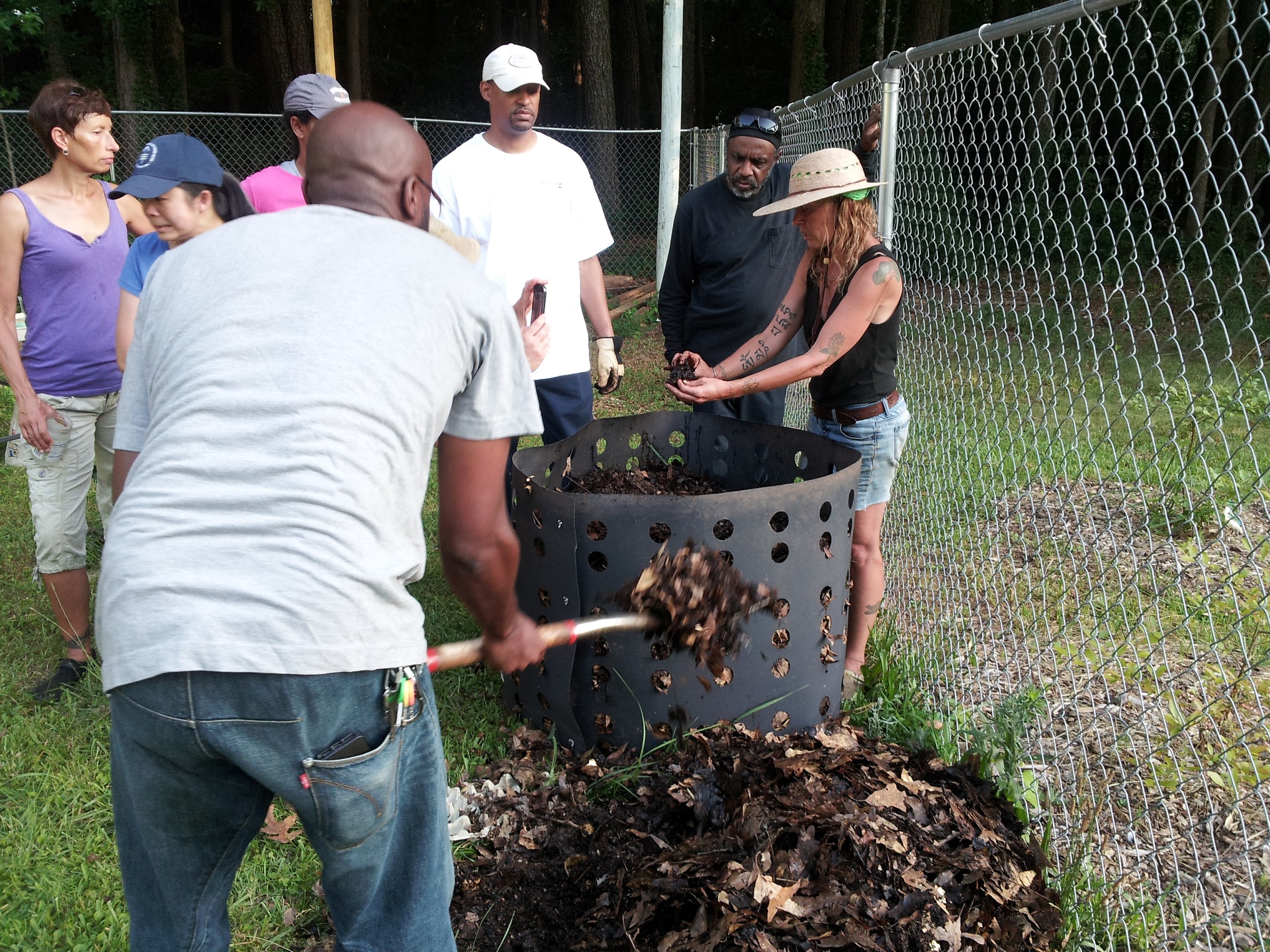
The festival was part of the Alliance’s Healthy Soil, Healthy Community initiative – a series of workshops, demonstrations, soil testing, and other activities organized in partnership with numerous community organizations to support the growth of community gardens and raise awareness about the importance of healthy soil and composting. The initiative offered 30 free public workshops across 5 counties of Metro Atlanta to educate gardeners on the elements of living soil and methods to build soil. The partners jointly designed a resource guide for Healthy Soil, provided composting signs and bins, and distributed local compost to over 50 community gardens in the region. Click here for a list of partners.
To strengthen and expand the capacity of local food innovators and entrepreneurs, the Food Well Alliance has partnered with Atlanta’s Center for Civic Innovation to create the Food Innovation Network – a formal network of entrepreneurs, educators, and community organizers dedicated to growing and using local food, starting a food business, nutrition and health, and food access. The network offers events, trainings, one-on-one advising, and encourages participants to share resources and ideas to help build a stronger Atlanta food system.
Connection to Food System Planning:
Food systems planning will be critical to the success of Food Well Alliance. An assessment of the current landscape is needed in order to have baseline data, to evaluate and measure impact, and to create a roadmap for going forward. But first, Food Well Alliance is working to convene all of these organizations and people together to explain how collective impact could work in this context, how it serves their needs, and how to best align efforts to bring greater participation and investment to the local food movement in Atlanta.
Throughout the course of its first year, Food Well Alliance discovered a common obstacle to improving food systems: the silo effect. So many people diligently working with local food know that they are part of an interconnected web of educators, producers, consumers, and distributors but they don’t necessarily see it within a local food system framework. But rather than view this as a barrier, the Alliance chose to view this as an opportunity – coming to a common understanding of what the local food system is, why each piece is important, and how they are all needed for the whole to be successful.
The Community Gardens working group was the first effort to convene a group around a collective impact approach to assess and prioritize community needs. This group of 7 nonprofit and education leaders shaped the goals and design of the Healthy Soil, Healthy Community Initiative and will do an evaluation of the process and program this winter. Other working groups are currently in development for 2016, based on priorities and challenges identified by the community.
To learn more, visit Food Well Alliance or find us on Facebook.
Photos courtesy of Seanna Berry and Food Well Alliance
Seanna Berry works on research and development at Food Well Alliance and has written on food systems issues nationally and in Atlanta. Prior to earning her graduate degree in City and Regional Planning from Georgia Tech, she worked in community food systems growing, processing, selling, and distributing fresh local food. She sees great opportunities to incorporate agriculture into how we shape our neighborhoods and regions.
Erin Thoresen (@ELThoresen) loves food, travel, and thinks a lot about what makes a “good” place. Her work has brought these interests together in food systems planning – helping launch youth-staffed farmers’ markets with Sustainable Long Island and serving on the Suffolk County Food Policy Council. She now works in transportation at Gresham, Smith and Partners in Atlanta and continues her involvement with food systems through APA-FIG.

