The National Sustainable Agriculture Coalition (NSAC) is currently seeking a Policy Intern for the fall term beginning late August 2016 and lasting until early January 2017. This position is paid, full time, and is located at NSAC’s DC office on Capitol Hill. For more information and instructions on how to apply, please see the position description at: http://sustainableagriculture.net/about-us/jobs/
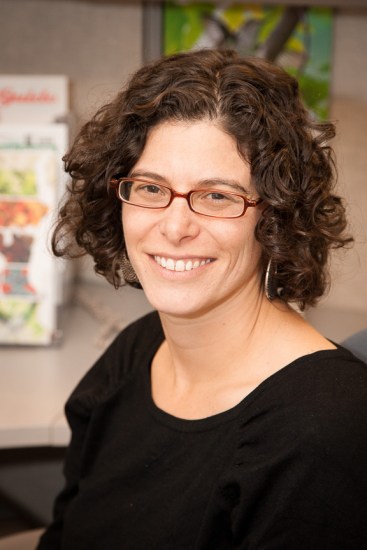
Faces of Food Systems Planning: Sharon Lerman

Sharon Lerman is the Food Policy Advisor for the City of Seattle. Based out of the City’s Office of Sustainability and Environment, Sharon provides policy direction and strategic advice to increase options for access to healthy and affordable food for Seattle’s residents. Sharon was interviewed on July 7, 2016 by Andrea Petzel.
What do you enjoy about your work? Food systems planning is still a young field, and there is so much to learn from other disciplines about how we approach our work. I enjoy working with smart people across disciplines and learning from the decades of experience in their fields. There are so many translatable lessons from the history of housing policy, community development, economic development, land use planning, and others. I also love working for local government – knowing that the reason I go to work every day to make Seattle a better place for people who live here.
What do you find challenging about your work? Food systems planning is complex, and often there isn’t a single solution to all the challenges we’re wrestling with. It’s sometimes difficult to set one priority aside to really focus on another, but I believe we sometimes need to do that. Ultimately, it’s a suite of activities, policies, and initiatives that are needed to build the just and sustainable food system that we’re working towards.
Where does addressing food systems issues fit in for your work with the City of Seattle? All of my work is about food systems, and I get to address it from many angles. Sometimes I’m focusing more on human services aspects, sometimes on supporting small businesses, and other times on farmland preservation. I work with many folks in city government, and some of our best food systems champions are in positions that aren’t titled “food” people, but they bring a food lens to their work and are able to help make sure food is considered across the work of city departments.
What areas of the food system do you focus on in your work? My work as food policy advisor is greatly informed, and influenced by Seattle’s Race and Social Justice Initiative. This has led to a strong focus on food access and affordability, which were top concerns raised by the community during the development of Seattle’s Food Action Plan. Seattle is becoming increasingly unaffordable for low-income people and other vulnerable populations, healthy food is one of the first things to go when people struggle financially. So while my work also includes supporting our local food economy, food waste prevention, and local food production, healthy food affordability has been a prominent focus.
How did you become a food systems planner? My interest in food policy started as an undergraduate with an interest in hunger in the developing world. Understanding the role that political, distribution, economic, and power systems played in solving – and also creating – hunger, I wanted to understand how these same systems worked locally. I worked for community-based organizations for a number of years, and eventually pursued a joint master’s degree in City and Regional Planning and Public Health at the University of California Berkley, focusing on health equity.
What do you wish you would have known before going to planning school? During planning school, I pursued internships and hands-on projects with many different organizations. I found it impactful to apply the concepts that I was learning on the ground, and also to get a feel for different types of agencies and organizations. I’d encourage students to seek out different types of stakeholders to work with. Understanding their priorities and what drives them will also help you to better identify your own priorities and what really drives you, as you embark on your career.
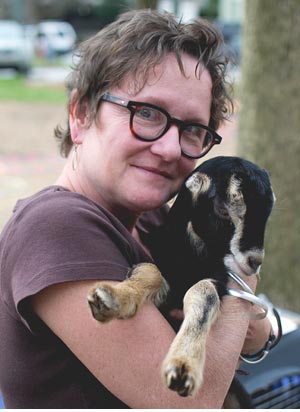
Faces of Food Systems Planning: Mary Yetter

Image Source: Piedmont Park Conservancy
Mary Yetter is a Program Coordinator at the Piedmont Park Conservancy in Atlanta, GA where she manages the Piedmont Park Green Market. In her unpaid work, she is also a small-scale grower/farmer and dedicates herself to increasing access to local food.
This interview was conducted via phone by Erin Thoresen, a member of the APA-FIG Communications & Outreach Working Group on July 8, 2016. The following responses have been edited.
What is your first and last name? Mary Yetter
What is your current position? Program Coordinator, Piedmont Park Conservancy
How long have you held this position? 2.5 years
What do you enjoy about your work? The flexibility to do what I want.
Similarly, what do you find challenging about your work? I find the lack of interest by my organization in what I do challenging. There is a general apathy in the organization.
What areas of the food system do you focus on in your work? In my work I focus on farmers markets, going from the farm to the market, and promotion to get people to purchase. Local food. In my unpaid work, I farm. I am in small-scale production.
In the work that you perform, where does addressing food systems issues fit in? How has this changed over time? Hoping to effect change to bring smaller scale availability and local availability to the population. We’re working to get fresh – I don’t like to say that – just-picked food to people. Before I even did this position, it was really different here. Coming to Atlanta was eye-opening – the lack of access, lack of availability, lack of awareness. Atlanta ranks low in that area. Now there are a more markets – we’ve probably reached saturation even. But there’s not enough promotion to make them successful. There is change [happening], but I just don’t think that the change and the promotion are working hand-in-hand. It’s getting there, but progress is slow.
Do you consider yourself a food systems planner? Why or why not? Well, in a broad sense, yes. I have a public health background. I approach everything from public health perspective. I work with small-scale farmers and growers. I also work with [the organization] Community Farmers Markets a lot. So I think yeah, it’s part of that system. Part of what I do is work in my own local community to create access, to connect people with food. When I got here, there was nothing in terms of fresh-picked or local. It was – I hate this term, but it was a food desert. Now that is starting to change.
What is the biggest food systems planning-related hurdle your community/ organization faced in recent years and how was it dealt with? Actually we’ve been planning and developing an urban farm, but it hasn’t taken off due to a lack of buy-in and lack of funding available. I think there’s still a long way to go in terms of financing and buy in for these types of things. It’s a barrier. I see this across Atlanta in general. They [the City] hired a sustainable urban agriculture guy, but he’s not even a grower. He’s a landscape architect who is well versed in City ways. It looks good, but I see it as superficial action with no real change. It’s going to take a group of more grassroots people to call people to task.
Do you think that group exists already? The grassroots group to make that change happen? For small farmers, they’re so busy they don’t have time. Plus they’re wary of crossing the City. It’s going to take time.
How has your perception of food systems planning changed since you first entered the field? I was working on an international perspective, but here I’ve gotten more involved in trying to push and work with smaller farmers to empower them. Helping with land acquisition, financing, and support them. It’s not organized but in small circles of folks I work with. The Southern Sustainable Agriculture Working Group is great. They put on a great conference.
Who has had the most influence on you as a food systems planner? Not one person specifically, but I work with farms and partner with them. I work with a couple of older farmers who take on younger farmers to teach and mentor them – since I don’t have my own land. They teach seed, soil, working with tractors. They’re very generous with their energy. I also admire Crack in the Sidewalk farm – they are true-blue in terms of trying to change, to create access where it doesn’t exist, promoting small scale urban ag. They follow sustainable practices,
Do you have any advice for someone entering the food systems planning field? What makes you successful in your work? What skills do you use the most in your food systems planning related work? I’m an action-oriented person. Going to meetings is fine, but if you don’t do something, then it doesn’t matter. Doing something in the physical sense. Physical skills are essential. Problem solving and mediation – that’s what I really do. Sometimes it’s like being a psychologist.
What do you wish you would have known before going to planning school? How much I like farming and food systems. I would have redirected into a different area.
JOB OPENING: South Carolina Policy Coordinator – Columbia, SC
- The South Carolina Policy Coordinator is a full-time, salaried position (40 hours/week) with the Carolina Farm Stewardship Association (CFSA). The position is based in Columbia, SC. The SC Policy Coordinator works as part of the Policy Team to advocate for state policies that better support local food, organic farming, and resilient regional food systems.
About CFSA
Carolina Farm Stewardship Association (CFSA) is a member based 501(c)(3) non- profit organization that helps people grow and eat local, organic food by advocating for fair farm and food policies, building the systems that organic family farms need to thrive, and educating communities about local, organic farming. We support farming and food that is good for consumers, good for farmers and farm workers, and good for the land.JOB SUMMARY:
The SC Policy Coordinator works in collaboration with the Policy Director, other CFSA staff, and partner organizations to influence the South Carolina General Assembly, state-level administrative agencies, and land-grant universities on issues of importance to local and organic food and farming in South Carolina. Specific responsibilities include assisting in the development of state level advocacy goals, advocating for specific policy solutions to achieve those goals, educating state (and occasionally federal) policy-makers on issues of importance to the local and organic food and farming community, and organizing and overseeing grassroots communications campaigns in support of CFSA’s policy goals.The work will primarily take place remotely in Columbia, SC. CFSA’s main office is located in Pittsboro, NC.
The SC Policy Coordinator reports to the Policy Director.
JOB RESPONSIBILITIES:
STATE POLICY (80%):
• Engage CFSA members and stakeholder communities in developing policy priorities and grassroots campaigns for South Carolina.
• Develop legislative and regulatory proposals and strategies to advance CFSA’s advocacy priorities, and implement strategies to influence legislative and regulatory processes.
• Educate state legislators and their staff and administrative agency personnel regarding CFSA’s advocacy priorities.
• Monitor state legislative developments and organize CFSA grassroots and grasstops responses to issues relevant to CFSA’s policy priorities and overall mission.
• Follow SC news related to food and farming policy, and assist with the development of a monthly e-newsletter compiling policy news for CFSA’s members.
• Coordinate grassroots campaign implementation with CFSA’s Community Mobilizer and partner organizations.
• Coordinate media (traditional and social) outreach, in conjunction with CFSA communications staff and partner organizations, in support of policy campaigns.
• Influence administrators of agriculture programs at SC’s land-grant university to increase resources allocated to organic agriculture research and education.
• Establish and maintain relationships with other academic institutions that are supportive of local, organic food system development.
• Achieve policy wins that advance CFSA’s mission and advocacy priorities.COMMUNITY ENGAGEMENT (10%)
• Provide resources and guidance to local communities (such as food councils, extension offices, community development agencies) to successfully develop and implement policies to promote local food economies, stewardship of agricultural resources, and healthy diets.
• Coordinate with regional and community-based partners to implement local policy campaigns
• Collaborate with allied organizations to offer grassroots leadership development programs.
• Support and strengthen CFSA’s community mobilization network.OUTREACH AND ADMINISTRATION (10%):
• Increase awareness and visibility of CFSA’s advocacy work, by giving presentations, accepting speaking engagements, and conducting general outreach.
• Represent CFSA at meetings and events held by allied organizations and stakeholders.
• Identify and pursue opportunities to expand CFSA membership and ensure member satisfaction.
• Identify and pursue, in conjunction with other CFSA staff, funding opportunities to support policy initiatives.
• Participate in work planning with the Policy Team on an annual basis, and in weekly meetings of the Policy Team about ongoing work.
• Meet all certification and recordkeeping requirements placed on lobbyists by the state of South Carolina.
• Contribute to quarterly reports documenting the work of the Policy Team.POSITION REQUIREMENTS:
• Either a JD or master’s degree in public policy plus 3 years’professional experience, or five years’ professional experience. The required experience must include work on successful policy campaigns (local, state or federal) that engage diverse partners and communities in efforts to promote systemic change. Note that resumes that do not document the required number of years of policy advocacy experience will not be considered.
• Familiarity with the state legislative process and the role of administrative agencies in crafting policy.
• Demonstrated success working on policy campaigns targeting legislative or administrative policy makers.
• Experience engaging the public in grassroots policy action.
• Must be self-directed and capable of successful work outside of a traditional office structure.
• Proven ability to work well within a team, and with individuals, both internal and external, from diverse backgrounds.
• Excellent oral and written communication skills.
• Exceptional organization and time management ability, with proven ability to multitask, and consistently meet or exceed deadlines and goals.
• Commitment to sustainable agriculture principles.
• Strong knowledgeable of food systems issues; knowledge of the Carolinas’ food systems preferred.
• Strong analytic skills, including ability to identify systemic problems and develop innovative solutions.
• Excellent interpersonal skills.CFSA offers a competitive non-profit sector salary in the low- to mid- $40K,
DOE, with generous vacation and retirement benefits as well as a monthly
fringe benefit to support the purchase of health insurance. CFSA is an equal
opportunity employer and encourages applications from women and people of
color.To apply, submit a resume, list of professional references and a cover letter
explaining why you want to work to promote local, organic agriculture to
apply@carolinafarmstewards.org with “SC Policy Coordinator” in the subject
line. You will receive electronic confirmation of your email submission. No
calls, please.Applications are due by August 1, 2016. The anticipated start date is October
1, 2016.
JOB OPENING: Food Systems & Health Analyst – Washington, DC
Food Systems and Health Analyst
Union of Concerned Scientists
Washington, DC
http://www.ucsusa.org/about/jobs-ucs#foodhealthanalyst
The Union of Concerned Scientists (UCS) seeks a skilled analyst to lend public health and health equity expertise to our multi-disciplinary Food and Environment team. We’re leading the call for a national food policy that ensures access to affordable, healthy food for all Americans; guarantees fair wages for millions of farm and food workers; and protects the nation’s farmland, air, water, and climate. As Food Systems and Health Analyst, you will design and carry out creative research leading to solutions for our nation’s food system, and communicate them to policy makers, allies, and the public. Come join our team and help us fix food!
July will be Dedicated to Food Systems Planning!
Throughout the month of July 2016, the American Planning Association (APA) will highlight and promote food systems planning. In an effort to support this exciting campaign, the APA Food Systems Planning Interest Group (APA-FIG) will feature food systems planning related content across its blog and social media platforms. We will post interviews with practicing planners and people working across the food system, showcase food systems research, and more. Stay tuned for interviews with food systems planners from across the country, including but not limited to:
- Sharon Lerman, City of Seattle
- Ben Kerrick, Karen Karp and Partners (New York)
- Branden Born, University of Washington Department of Urban Design and Planning
Join the conversation! We welcome your submissions – share comments, images, articles, research, and tell us about your work. Join us on Facebook, Twitter (@APA_FIG or @APA_Planning), Instagram (@foodsystemsplanning), LinkedIn, and be sure to check out the FIG blog. Use the hashtag #foodsystemsplanning when you post and tag APA-FIG.
JOB OPENING: City of Baltimore City Planner II
City Planner II list is currently opened (http://agency.governmentjobs.com/baltimorecity/default.cfm) until June 30, 2016. If you know anyone who has an interest and qualifies, please share this information.
When there are food access planner position openings anytime throughout this year, the city must refer to the city planner II list that is generated from this posting. Therefore, if you have any interest in working for department planning as a food access planner now or within the year, than apply now to be on the list- application due by June 30th. This is the list we will use throughout the year for any food access planner job openings.
No calls or emails please.
JOB OPENING: National Sustainable Agriculture Coalition Policy Director (Washington, DC)
The National Sustainable Agriculture Coalition (NSAC) seeks a passionate, highly experienced policy professional who will build upon the Coalition’s accomplishments over the past 28 years. The Coalition establishes and secures support and funding for dozens of policies and programs that promote conservation; foster family farm agriculture; build new value-added and regional food markets and businesses; protect food system integrity; and support sustainable and organic research, education and extension. The Policy Director shares in the leadership of the organization with the Managing Director.
More information available here.
JOB OPENING: City of Madison, WI Food Policy Coordinator
The City of Madison is hiring a Food Policy Coordinator. This position will direct food policy work for the City of Madison by providing leadership and strategic direction to policymakers and stakeholders including, but not limited to, policy development, coordination, implementation, and analysis. This position will also oversee several food-related programs and provide administration and analysis of the programs. The position will have an intense focus on increasing equitable access to healthy, affordable, and culturally appropriate food to all communities and developing polices that positively impact the health and well-being of all residents of the City of Madison and beyond.
See full position description here.
Apply for this position by June 23, 2016.
JOB OPENING: ChangeLab Solutions – Program Director
ChangeLab Solutions seeks applications for a program director to lead national public health law and policy projects. This is an exciting opportunity for an experienced public health or policy professional who wants to develop strategy for major projects that will influence public health policy in states and communities across the country. The successful candidate will work with our interdisciplinary team of lawyers, urban planners, policy analysts, and public health professionals to develop legal and policy solutions that advance health, equity, and sustainability in low-income communities and communities of color across the nation.
For more information: Program Director Job Description