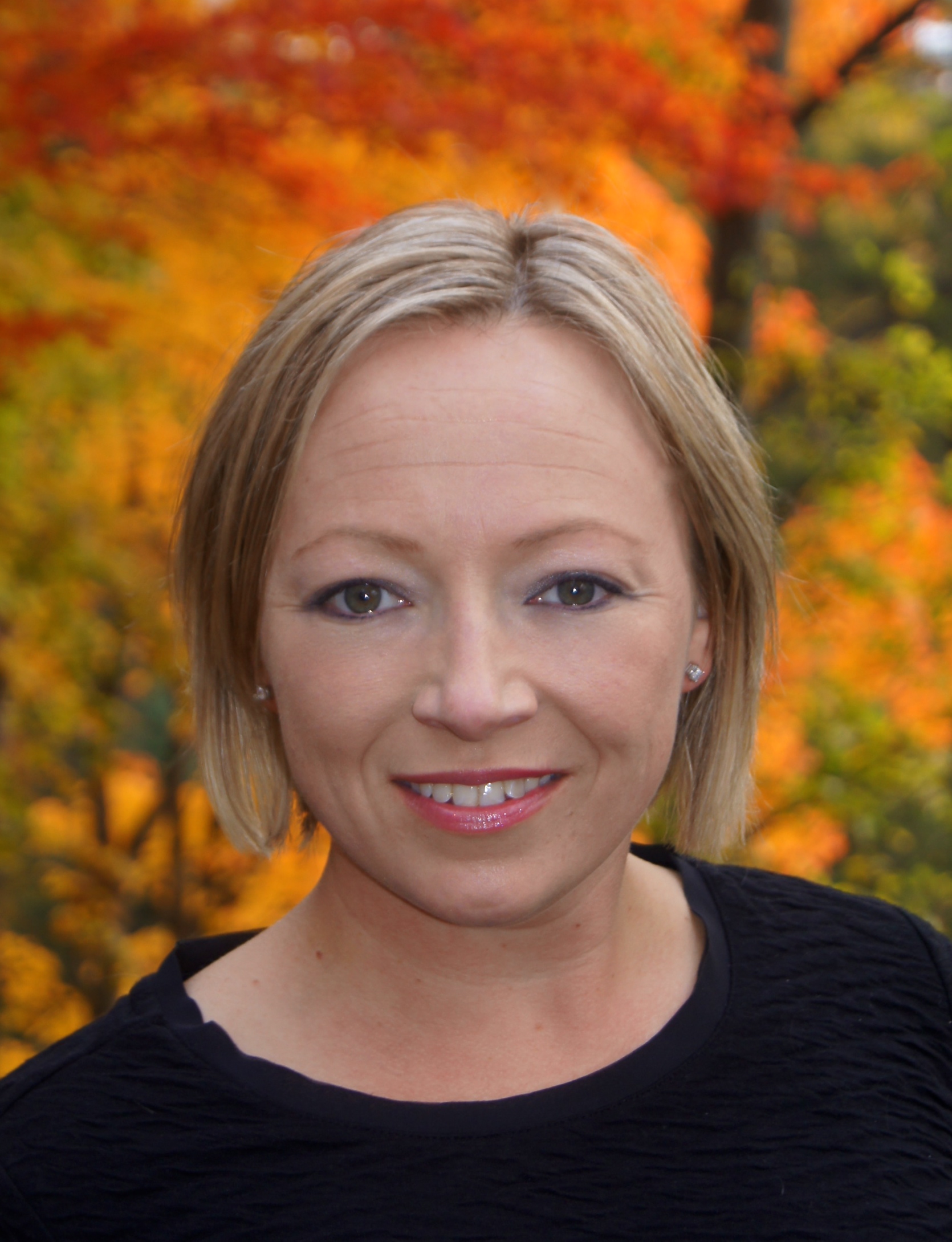
Faces of Food Systems Planning: Erica Campbell

Erica Campbell Farm to Plate (2)Erica Campbell, is the Director of the Farm to Plate Network in Montpelier, Vermont. She is also a member of the APA-FIG Leadership Committee and the Coordinator of the APA-FIG Policy Working Group.

Andrea Petzel, member of the APA-FIG Leadership Committee, conducted this interview in October 2015. The following responses have been edited.

Do you consider yourself a food systems planner? Why or why not? I am not a traditional planner, but I do consider myself a food system planner. In my current job I am coordinating the implementation of the Farm to Plate Strategic Plan. But I’ve also worked for a planning agency in Vermont to develop a regional food system plan for a three county region, and on a local level, I have also overseen a local food system assessment and have incorporated a food system chapter into our municipal plan.

What areas of the food system do you focus on in your work? The Farm to Plate Strategic Plan is perhaps the most comprehensive in the country; its nearly 1,000 pages include all elements of the food system. It began largely as a plan to spur economic development and jobs in the farm and food sector, but quickly broadened to include food access, health, environment, etc.

What is the biggest food systems planning-related hurdle your community/organization faced in recent years and how was it dealt with? While we have a very collaborative environment here in our little state, the diverse views of network members bring a host of challenges. For example, strategies that help make farms more viable may inadvertently be contrary to making food more accessible and affordable. Sometimes Network member organizations are in direct opposition around a policy or program initiative, such as a livable wage or paid sick days legislation. We certainly look at win-win opportunities, but sometimes we need to have challenging conversations, including issues of racial justice, equity, and working conditions.

How has your perception of food systems planning changed since you first entered the planning field? When I first worked as a transportation and land use planning consultant, I was aware of local food systems but I was unaware that food system planning was a field until I came across APA’s food system planning documents. I was really excited when I found these reports as they catalyzed a desire to focus on the food system field.

Who has had the most influence on you as a food systems planner? Wendell Berry has been a big influence on me as a person, and his writings have influenced my relationship with food, the land, and community. Donella Meadows was another big influence in terms of understanding leverage points for systems change. Growing up in a small rural state and having a close connection with the people who grew the food we ate (and growing it ourselves) also had a big influence on my understanding of food systems and community.

Do you have any advice for someone entering the food systems planning field? It’s really important to understand complex systems because plans ultimately need to be aimed at creating systems change. Even if you want to focus on one area of planning, an integrated approach that addresses the interrelatedness of issues is really helpful. Other knowledge areas that have aided me in my work include: policy analysis, research methods, public administration, economics, ecology, and sociology. Writing and communications are great skills to have too – using data to tell a story is a skill I am still working at!


Faces of Food Systems Planning is a series of interviews with practicing planners from across North America who are engaging in food systems planning and policy work. This series is part of APA-FIG’s efforts to highlight food systems planning as an important planning topic. Click here for more information.

Produce Incentives Expand from Farmers’ Markets to Grocery Stores


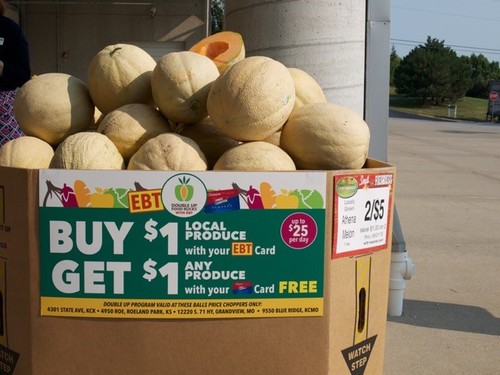
Kansas City supermarkets are testing a program that doubles low-income shoppers spending on local produce. Photo by Patty Cantrell.

A popular incentive for low-income shoppers at farmers markets is moving into grocery stores. The expansion promises nourishment for both rural and urban areas.

Around 5,000 low-income shoppers used the program from June through August in a trial run at four Price Chopper supermarkets in metro Kansas City. They spent nearly $30,000 on produce, mostly from smaller scale farmers in the region.

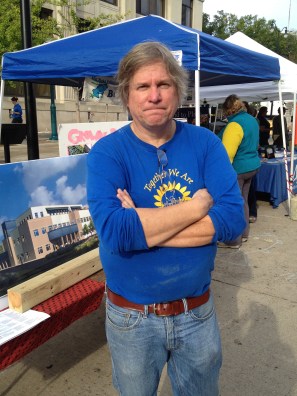
“This is economic development,” said Mark Holland, mayor of the Unified Government of Wyandotte County, Kansas. “It benefits the farmers selling local produce. It helps people who need it most to stretch their food dollars. It also benefits grocery stores; it brings people into the store.”

The Double Up Food Bucks retail expansion in Kansas City provides shoppers who use Supplemental Nutrition Assistance Program (SNAP, or food stamp) benefits with a dollar-for-dollar match on their Price Chopper loyalty cards when they buy up to $25 a day of locally produced fruits and vegetables. They can then use the extra money to buy more of any produce, doubling the amount of healthy food they take home.

“It fit right in with our loyalty card program,” said Mike Beal, chief operating officer for Balls Food Stores, a regional family-owned chain with 15 Price Chopper and 11 Hen House supermarkets in the Kansas City area.

Farmers are also feeling the love.

Balls buys from more than 150 farmers through Good Natured Family Farms. The regional marketing cooperative, or food hub, supplies local products for every department, from produce, dairy and meats to honey and other items like jams and pickles.

Diana Endicott, president of Good Natured Family Farms, said the group’s produce sales are up 20 to 30 percent at the four Double Up Food Bucks test stores.

By Patty Cantrell, Regional Food Solutions

Originally Published 9/18/15 – full article at WallaceCenter.org

Faces of Food Systems Planning: Megan Horst

Megan HorstMegan Horst is Assistant Professor at Portland State University in Portland, OR.

Andrea Petzel, member of the APA-FIG Leadership Committee, conducted this interview in October 2015. The following responses have been edited.

Do you consider yourself a food systems planner? Yes!

What do you enjoy about your work? Working with students and infiltrating their planning minds with foods systems issues. I also really like bridging the gap between research and practice.

What do you find challenging about your work? Food system work is filled with wicked problems with no one cause but rather systemic injustices. Trying to address all of these issues can be challenging, when one has little power or say over the cause. Sometimes the heaviness of the problems can be daunting; federal policy, climate change, social justice issues.

Who has had the most influence on you as a planner and as a food systems planner? I’ve really been influence by literature beyond planning –Julie Guthman, Alison Alkon, Julian Aguyeman – people who work in food justice and how the food movement isn’t paying attention to justice and is over-focused on local and sustainable food.

How has your perception of food systems planning changed since you first entered the planning field? I think I originally came to food systems planning based on my interest in sustainability issues and now I marry it much more closely to social justice issues.

What areas of the food system do you focus on in your work? I work mostly on the research side of things and right now I have an interest in farmland and farming issues – the effectiveness of urban growth boundaries, how we deal with expected growth, and whether investors are making a grab for farmland. Farmland access could be a concern; who gets to access and who’s producing the food. Is it corporate investors? Is it luxury or second homeowners? What does that mean for access by landless, young, immigrant farmers – farmers who really want to grow food sustainably for the local population? There’s lots of work happening to foster access to new farmers and that’s exciting.

Do you have any advice for someone entering the food systems planning field? Read from literature from broader food justice issues, not just planning topics. Read about international work, and learn about anti-oppression and anti-racism training. As a planner you also need to use many practical skills; you need to be good at facilitating meetings and always work on being better at communicating and being more inclusive.


Faces of Food Systems Planning is a series of interviews with practicing planners from across North America who are engaging in food systems planning and policy work. This series is part of APA-FIG’s efforts to highlight food systems planning as an important planning topic. Click here for more information.
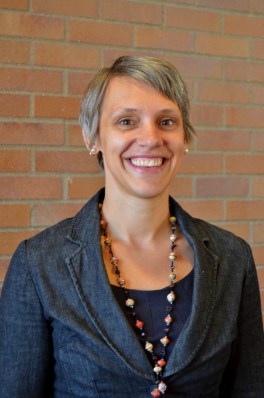
Faces of Food Systems Planning: Becky Bodonyi

BeckyPhoto

Becky Bodonyi is a planner working as a program specialist for the Multnomah County Health Department located in Portland, Oregon. Her work focuses on bridging urban planning, public health, and food access issues. Becky is also an active member of APA-FIG’s Policy Working Group.

Kimberley Hodgson, Chair of APA-FIG, conducted this interview via email in October 2015.

  1. What is your first and last name? Becky Bodonyi
  2. What is your current position? Program Specialist, Multnomah County Health Department, Portland, Oregon
  3. How long have you held this position? Just over three years.
  4. What do you enjoy about your work? I love working at the intersection of public health and urban planning. It’s an exciting time to be a planner at the health department, as more and more people in a wide variety of sectors are starting to realize how their organization or their work influences health. The idea that place matters is becoming more widespread and I get to help people tell this story. I also love geeking out about the data – both quantitative and qualitative – making maps and working to figure out how we’ll get from a vision to tangible change in our communities. Finally, I’m always told that planners talk in “planner speak,” and I love helping non-planners understand the world of planning, for example, deciphering maps, visualizing floor-area-ration (FAR), or how a density bonus can help us achieve multiple outcomes.
  5. Similarly, what do you find challenging about your work? Change is slow. It takes time to change systems, especially when the work is about making those systems more fair and just. The health inequities we see today, especially related to food, nutrition and chronic disease, have their roots in a long history of racism and policy decisions across all sectors, from agriculture and housing to transportation and education. The challenge is understanding how all of this is related but also accepting that not everything can be “fixed” overnight and being patient with yourself. I first heard Wes Jackson’s words nearly 17 years ago: “If your life’s work can be accomplished in your lifetime, you’re not thinking big enough.” And while it has since inspired me, I will also admit that it is ultimately my biggest challenge.
  6. What areas of the food system do you focus on in your work? I’m focused on healthy food access. My projects of late have centered on food retail and integrating food access into transportation planning.
  7. In the work that you perform, where does addressing food systems issues fit in? How has this changed over time? I work mostly on the consumer end – where do people shop and how do they get there, what’s on the shelf, do customers know how to prepare it, what is actually getting eaten. That said, working in healthy retail and helping small retailers overcome barriers has also meant I have had to engage somewhat with production and distribution through farm to store efforts, joint purchasing, and learning what wholesale produce suppliers serve the region.
  8. Do you consider yourself a food systems planner? Why or why not? Yes and no. I am an urban planner by training and I work on issues directly connected to food systems. But my focus within the food system has been so narrow that I don’t immediately identify as a food systems planner. Rightly or wrongly, in my head, I’ve reserved that title for folks who are working at a systems level, say convening a process to integrate food systems into a comprehensive (or general) plan or to develop a multi-sector food action plan.
  9. How has your perception of food systems planning changed since you first entered the planning field? I was an Environmental Studies major in undergrad and I took a few sustainable agriculture classes, which opened my eyes to the world of agriculture policy and food systems. When I got to planning school, which wasn’t that long ago, I guess I was surprised to learn that food systems planning was relatively new. It seemed so obvious to me that planners should be paying attention and using their tools and planning processes to support/influence/improve the food system. I’m glad it’s getting more and more attention now.
  10. Who has had the most influence on you as a planner? As a food systems planner? I don’t have any particular influences. I am a social justice advocate and planning is just one of my tools that I use to advance equity and fairness. I was raised to believe everyone deserves to live to their full potential and to do so in a physical, social and political environment that supports their total well-being and that presents opportunity not barriers. I picked planning as a career to contribute to this vision. I also just love cities and talking with friends (and strangers) about what works and what doesn’t about a particular place. Every day conversations and observations are probably the most persistent influence I have on my planning practice. I get around mostly by walking, biking or taking transit, which gives me a lot of time to observe the city and to interact with other people. A lot of my thinking is done on the bus.
  11. Do you have any advice for someone entering the food systems planning field? What makes you successful in your work? What skills do you use the most in your food systems planning related work? Food systems planning is a broad field – don’t just limit yourself to working for a planning agency or a firm. I didn’t expect to work for a health department but am finding it to be an interesting place to be a planner and be a bridge between urban planning, public health and healthy food advocates. Skills that have proven useful in my role have been project management, negotiation, data and policy analysis, evaluation planning, and relationship building.
  12. What do you wish you would have known before going to planning school? Planning is as much an art as it is a science. I knew I didn’t want to go into the academic world so I focused my school search on programs that offered the so-called ‘professional degree.’ I didn’t exactly know what this meant and it was kind of sold to me as a two-year program where you developed technical skills, like understanding land use laws or GIS, and boom – you’re workforce ready. While those technical skills are essential, planning is about people and communities and humans’ relationships with each other and with place. It’s also about politics, conflicting priorities, and chronically underfunded cities (or counties). It is way more complicated and messy than I expected and this is where the art comes in. Planning school helped me develop skills to navigate this part of planning, but truthfully, the art of the profession is something that is better learned in the work place not necessarily a classroom. (And, I’d argue, the skills a planner needs to succeed in the art of planning don’t need to be learned in an urban planning job).

Faces of Food Systems Planning is a series of interviews with practicing planners from across North America who are engaging in food systems planning and policy work. This series is part of APA-FIG’s efforts to highlight food systems planning as an important planning topic. Click here for more information.

The Historic Legacy of the Food-Income Poverty Model

1939 Food Stamp

The first food stamp issued in 1939.

Urban planners depend on the Official Poverty Measure (OPM), but few understand the relationship between the OPM and food budgets. In the 1960’s, Mollie Orshansky, a statistician working at the Social Security Administration, was instrumental in coming up with a scientific definition for what she called the “undoubted poor”. To provide scientific justification for defining poverty, Orshansky argued that a nutritious diet was the most basic need families should not go without. Orshansky used the USDA’s economic food plan, which was considered the minimum budget a family could use to purchase an adequate diet, and the 1955 USDA Household Food Consumption Survey to determine how much the average family spent on food. Together, Orshansky defined poverty as any family that had a total income less than three times the economic food plan. This definition rested on two critical assumptions:

The first assumption set the food-income multiplier at three. Since the average household in 1955 spent one out of every three dollars on food, a family should be able to purchase a healthy diet with a third of their income and have enough money left over for the undefined needs. Today’s OPM still uses a multiplier of three to determine the minimum level of consumption, but based on changes in consumer expenditures, the multiplier should have been four in 1960-61, six by 1988, and around seven today.

The second assumption was that the USDA’s economic food plan would allow for an adequate diet. The economic food plan, today referred to as the Thrifty Food Plan (TFP), was not designed for long-term use, but today millions of households are expected to make healthy adequate meals from an unforgiving budget year after year. In addition, the TFP, which is also used to determine food assistance benefits through the Supplemental Nutrition Assistance Program (SNAP, formerly known as food stamps), assumes a household produces no food waste and has an expert food preparer, with excellent menu planning and food shopping skills. The TFP’s historic foundations stressed the need for home food production, health education, and local networks to ensure the affordability of healthy food. The assumptions behind the definition of poverty provide no margin of error and demand that all meals be made from scratch.

Orshansky was the first critic of her measure of poverty and saw the food-income relationship as an “interim guide.” However, Orshansky’s standards for counting the “undoubted poor” have determined six decades of policy. In 1965 the poverty level for a family of four was $60 a week ($1,963 a month in 2014 dollars).The OPM in 2014 was $1,988 a month ($23,850 a year) for a family of four. In 2014 the monthly TFP budget for a family of four was $650, or one third of $1,988.

Since the 1960’s the food system and consumer expenditures have experienced tremendous changes. Changes such as food retail consolidation and the changing role of women in the workforce make the TFP and the food-income multiplier severely out of date. Astonishingly, the OPM can be determined by simply multiplying a 60-year-old food budget by three and adjusting for inflation.

A more appropriate food budget for a family of four would be closer to $1,000 a month and the food-income multiplier should be closer to seven. That means that any family of four earning less than $84,000 a year is probably making difficult choices been purchasing food for a healthy diet and providing for all other needs (housing, education, transportation, health care etc.). For the more than 18 million households living below the poverty level there is clearly no margin for error. In this context, government programs set up an impressive facade that does not address the true costs of poverty and reinforces an impossible food budget that very few families could make work.

What can urban planners do? Here are some recommendations:
1. Become familiar with the USDA Food Budgets
2. Find out which stores in your community provide Market Basket Prices below the Thrifty Food Plan – see an example from Portland, OR – Grocery Cart PDX
3. With an initial focus on the stores with the best Market Basket Prices, find out what the current public transportation options are and conduct a walkability audit. See if there are any immediate ways to improve mobility between people living in poverty and food retailers.
4. Work with local food retailers and local food producers to make affordable, nutritious and culturally appropriate foods readily available.


About the Author. Nathanael P. Rosenheim, Ph.D. is Assistant Research Scientist in the Hazard Reduction and Recovery Center, College of Architecture at Texas A&M University, College Station, Texas.

Faces of Food Systems Planning: Jaspal Marwah

IMG_3963 - Version 2Jaspal Marwah is a regional planner working for Metro Vancouver, a regional planning agency, in Burnaby, BC. He is responsible for developing an action plan to implement the Metro Vancouver Regional Food System Strategy.

Kimberley Hodgson, Chair of APA-FIG, conducted this interview via email in October 2015.

What is your first and last name? Jaspal Marwah

What is your current position? Regional Planner, Metro Vancouver, Burnaby, BC

How long have you held this position? 2 years

What do you enjoy about your work? I like the variety of assignments and projects that I’m able to participate in – from technical work like processing requests to change land use designations, or assisting municipal partners in aligning their planning processes with the regional growth strategy, or championing a new plan or strategy like the regional food system action plan. My area of focus tends to also be in social planning issues, which I find rewarding to participate in. And it’s also interesting to focus on the connections and opportunities for local governments to collectively advance initiatives that are region-wide.

Similarly, what do you find challenging about your work? Working at a regional scale doesn’t have the same level of engaging technical, hands-on, on the ground type of planning work that happens at the municipal level. And political interests are always a challenge to navigate.

What areas of the food system do you focus on in your work? I’m working on an action plan to implement our regional food system strategy. My focus is on convening all of the local governments in Metro Vancouver to assess the current state of activity related to the region’s food system, to map out what’s happening on the ground in the next 5 years, and to address areas that need more effort. This initiative focuses specifically on the dimensions of the food system that local government have immediate control over and can directly engage with.

In the work that you perform, where does addressing food systems issues fit in? How has this changed over time? My involvement with food systems planning started out working with colleagues to plan and deliver a consultation series on different aspects of the regional food system, including some analysis of the feedback and outcomes. Following that, the food system portfolio migrated from a different department into the planning department, where I was able to take the lead on moving things forward in developing a regional food system action plan. Currently, food systems planning remains one of my lead projects.

Do you consider yourself a food systems planner? Why or why not? I consider myself a planner who is fortunate enough to be involved in food policy and food system issues. Although I enjoy being engaged in the regional food system, it is only one dimension to my overall planning work.

What is the biggest food systems planning-related hurdle your community/organization faced in recent years and how was it dealt with? One of the biggest challenges is in securing and sustaining political and organizational support for bringing food system issues into the local government sphere of activity. Some don’t always see the important role that local governments have in supporting the food system. Building connections among local governments helps create a network of peers and practitioners to learn from, and to develop common approaches and language around integrating food system issues into local government processes. Similarly, building relationships between local government and civil society groups seems to be a very effective approach to enabling a lot of on the ground activity.

How has your perception of food systems planning changed since you first entered the planning field? I started off in the green development/ sustainability policy field, and wasn’t aware of food systems and the connection with planning at that time. Since then, I’ve seen the steady growth of food systems issues in general within my community, and increasingly in the realm of local government interests. It is now a burgeoning field with opportunities for practitioners and supporters in the public, private and non-profit sectors.

Who has had the most influence on you as a planner? As a food systems planner? The colleagues and partners I worked with when I first started out in the consulting field helped provide perspective and experience to learn from and to understand the field more holistically. For food systems planning, my peers Janine de la Salle and Mark Holland have always been passionate voices and innovators in the field, and have helped bring food systems planning to the forefront of planning practice in Vancouver.

Do you have any advice for someone entering the food systems planning field? What makes you successful in your work? What skills do you use the most in your food systems planning related work? Don’t feel constrained by job titles or even distinctions between public/private/non-profit sectors – there are many paths that lead to food systems planning. Look for opportunities to be involved in food systems issues in your community – there are non-profits that are always looking for assistance, and who are doing a lot of the ‘on the ground’ work; municipal advisory committees with opportunities to be involved as a citizen; attend council meetings for food systems issues to get a sense of the discussion, debate, areas of concern from a local government perspective; and, if one is working in a planning company that doesn’t have any food systems experience, there’s an opportunity to bring the issue to the table as part of other projects. Like any planning work, the skills involved are varied and depend on the nature of your work, but some skills are always helpful, such as: systems thinking (to consider how all parts of the food system interact), facilitation (sooner or later you’ll be involved in some form of consultation and group work) and relationship-building (positive and productive relationships with other agencies is key to advancing food systems issues).

What do you wish you would have known before going to planning school? Planning is a broad, generalized field and has as many dimensions as it has practitioners. The education helps give one a sense of the field, but the real learning really only happens after planning school once you’re practicing!


Faces of Food Systems Planning is a series of interviews with practicing planners from across North America who are engaging in food systems planning and policy work. This series is part of APA-FIG’s efforts to highlight food systems planning as an important planning topic. Click here for more information.

Faces of Food Systems Planning: Thyra Karlstrom

ThyraThyra Karlstrom is a senior planner for Marquette County, Michigan located in the Upper Peninsula (UP) near Lake Superior. Food systems planning has not always been part of her work, but in recent years she has been able to focus some of her time to work on food systems issues. Recently, she led the development of a comprehensive local food supply plan for the county, and is currently working on a meat processing feasibility assessment for the UP.

Kimberley Hodgson, Chair of APA-FIG, conducted this interview via email in October 2015.

  1. What is your first and last name? Thyra Karlstrom
  1. What is your current position? Senior Planner, Marquette County, Michigan
  1. How long have you held this position? I have worked for Marquette County for 8 years, and as Senior Planner for 1.5 years.
  1. What do you enjoy about your work? The diversity of projects, all of which share a common element- improving community. In addition to traditional county-level planning, the Marquette County Planning Division is also charged with managing a community development program, county forest and recreation facilities.
  1. Similarly, what do you find challenging about your work? The same thing I enjoy about work can also be a challenge. Having to shift in and out of topics that range from plan writing to managing a forest to balancing a recreation budget is a challenge.
  1. What areas of the food system do you focus on in your work? Mostly policy and education. My position as a county planner presents opportunities to share information and raise awareness of food systems with local municipalities. It is unusual for rural municipalities to have planning staff. It is common for a township supervisor to also serve as the zoning administrator, code official, etc. leaving no time to research and develop food systems policy.
  1. In the work that you perform, where does addressing food systems issues fit in? How has this changed over time? Addressing food systems issues fits into the traditional county-level planning work that I do. In 2013, a local food supply plan was adopted by the County’s planning commission and later by the county board. The Plan is a guiding document for our planning commission and planners to use and enables us to be active participants in addressing our community food system issues. On a routine basis, the county planning commission reviews proposed plans and regulations from local units within the county. One thing we look for is whether or not they are “local food friendly” and we offer suggestions for improvement. Over time, I believe our county government has taken a stronger role in addressing food systems issues. For example, the County is the lead applicant for a grant to study the feasibility of a USDA multiple species processing center(s) across the Upper Peninsula of Michigan.
  1. Do you consider yourself a food systems planner? Why or why not? I consider part of me a food systems planner, but that does not mean that this region is absent a food systems planner. A great characteristic about where I live, in the Upper Peninsula of Michigan, is the community’s ability to work in partnership – across municipalities, agencies, and sectors. Together, we combine our resources and achieve great things!
  1. What is the biggest food systems planning-related hurdle your community/organization faced in recent years and how was it dealt with? Navigating the Michigan Right to Farm Act (MRTFA) is a significant and on-going challenge as we try to strengthen our food systems. The MRTFA preempts local zoning regulation, but not always and there have been many court cases addressing this topic. It is hard for municipalities to create “local food friendly” regulations when there is a threat of litigation. We continue to monitor court cases, research what other municipalities are doing, and work on model zoning language for agriculture.
  1. How has your perception of food systems planning changed since you first entered the planning field? When I first entered the planning field well over 10 years ago, the term “food systems” was not on my radar. Through participation in Transition Marquette County and hearing Will Allen speak at the 2009 APA conference in Minneapolis, I was inspired to make “food systems” a common term in Marquette County. Components of a food system have always had a presence in planning activities, but today there is an increased awareness of how all of the components fit together and that now has an identity – “community food system”.
  1. Who has had the most influence on you as a planner? As a food systems planner? My planning advisor and professor during college, Steve DeGoosh. He is really a professor of community and has a talent to lead the community through discussion of tough subjects. My children motivate me to continue in the planning field, especially food systems planning. I want them to experience how food is grown and where it comes from and a strong community.
  1. Do you have any advice for someone entering the food systems planning field? What makes you successful in your work? What skills do you use the most in your food systems planning related work? The best advice that I can offer, and this extends beyond food systems planning, is to know your audience. A great idea can be snuffed out quickly if your audience feels alienated. It is also important to trust your ideas and to just go for it sometimes. Be a student and a team member-learn from others and provide support where you can.

Faces of Food Systems Planning is a series of interviews with practicing planners from across North America who are engaging in food systems planning and policy work. This series is part of APA-FIG’s efforts to highlight food systems planning as an important planning topic. Click here for more information.

RFQP: Upper Peninsula Multi-Species Processing Feasibility Study

The Upper Peninsula Multi-species Processing Feasibility Study Project is a cooperative venture between several stakeholders including Marquette County, Upper Peninsula Food Exchange, Farm Bureau, and regional planning organizations.

MDARD awarded Marquette County an $127,300 Strategic Growth Initiative (SGI) grant aimed to address the lack of USDA multi-species processing in the Upper Peninsula. The grant will be managed and administered by the County of Marquette with a substantial portion of it to be used to fund a study to assess the feasibility of an USDA inspected multi-species processing facility(s) in the Upper Peninsula.

As part of this process, Marquette County is issuing this Request For Qualifications & Proposals (RFQP) from qualified firms to conduct a substantial portion of the work scope of MDARD SGI Grant. The deadline for proposals is December 10, 2015.

For more information and to learn how to submit a proposal, click here.

Call for Proposals: National Farm to Cafeteria Conference, June 2-4, 2016, Madison, WI

NFC

Save the date for the 8th National Farm to Cafeteria Conference, a biennial event hosted by the National Farm to School Network that will convene more than 1,500 people working to source local food for institutional cafeterias and foster a culture of food and agricultural literacy across America.

Cafeterias in schools, childcare centers, universities, prisons and hospitals serve more than 40 million Americans every day, placing the farm to cafeteria movement at the forefront of the fight to end obesity and strengthen local food systems. The National Farm to Cafeteria Conference is the only national gathering of stakeholders from across this movement, making it the premiere opportunity to learn, network and collaborate with likeminded leaders from across the country. Registration will open Feb. 15, 2016.

Do you have expertise to share? NFC is seeking workshop, poster and lightning talk proposals from individuals and organizations working to improve our food system, strengthen community health, empower youth, build equity and increase opportunities for farmers. The Request for Proposals (RFP) is open now through Dec. 4, 2015.

Learn more here. 

Municipal Zoning for Local Foods in Iowa

lcsaMunicipalities in Iowa and across the nation are increasingly recognizing the multiple benefits of urban agriculture; however, zoning regulations can unintentionally impede urban agriculture. To respond to this challenge the Leopold Center for Sustainable Agriculture at Iowa State University funded Gary Taylor and Andrea Vaage to develop the Municipal Zoning for Local Foods in Iowa guidebook. The guidebook provides science-based guidance and sample zoning code language designed to reduce the barriers to, and promote production and sales activities commonly associated with urban agriculture.  Although written for Iowa, the guidebook contains practical information and code language applicable to any local jurisdiction.

The guidebook addresses the following common urban agriculture uses: aquaculture, bees, chickens, goats, front-yard gardens, community and market gardens, gardening on vacant lots, urban farms, season extenders, composting, Community Supported Agriculture (CSA) drop-sites, farm stands, farmers markets, food trucks and pushcarts, and urban agriculture districts.  Each chapter provides a general description of the activity, and the science-based information on standards and best practices associated with the activity; the public health, safety and welfare concerns commonly associated with the activity; a summary of the commonalities found among municipalities’ codes; and sample code language taken from municipalities that vary both in size and location.

For more information, click here.