Exploring “The Color of Food” – A book and website by Natasha Bowens

The Color of Food by Natasha Bowens (New Society Publishers) is the result of the author’s multimedia project launched in 2010 to share and amplify stories of food sovereignty in communities of color.  It uses stories and photographs to tell stories of farmers and explore and document the relationships between race and food.  The Color of Food tells stories of individuals, their experiences with issues ranging from crop loss to farmworkers’ rights, connecting lives with the food sovereignty movement through firsthand storytelling and observation. A central aim is to serve as an outlet for the voices of people of color in food and farming.  As the author says, “If we cannot see and hear from our communities, we will not have a food system free of racial inequalities.”

The web-based companion (http://thecolorofood.com/projects/) to the book provides resources for food systems planners, workers, researchers, and anyone else interested exploring issues of race, food sovereignty, and inequality within the food system. It includes an online (free) map and directory of people of color leading food and farming businesses, including farms, farmers markets, and other organizations, as well as a photo blog. Recent posts include pieces from CivilEats about a resurgence of black farmers in Texas and how the food movement can learn from #blacklivesmatter. Another central feature of the online site is the Color of Food Speakers Collective – a list of people working in farming, education, activism, food justice, and other realms, available to speak at events and for organizations on a range of issues, intertwining racial disparities in the food movement, the importance of preserving culture and building community, and personal stories.

Connection to food systems planning

Topics of food justice, food equity, and “food deserts” have become increasingly visible throughout food systems planning and policy work, yet many of the people most directly (and often indirectly) impacted by these issues are not visible or do not control the systems that result in disparities. Addressing inequity in the food system is a priority of a substantial portion of food systems planning and policy work these days and The Color of Food, the website, and speaker collective can serve as a forum and resource for exploring issues of race, equity, access, and justice.  They can help planners deepen our understanding of the impact of the dominant food system on communities of color and the impact of food planning and policy on communities. It can be frustrating, disheartening, and difficult to take on issues of race, class, and social injustice, but as planners who believe in equity – or any type of planners at all, we must. As Eric Holt-Gimenez, Executive Director of Food First put it recently in a post on CivilEats, in order to have a restorative food system, we must first tackle racism, and doing that shouldn’t be seen as “extra work” but rather “the” work.

By Erin Thoresen, APA-FIG member

New Senate Bill Aims to Boost Urban Agriculture

October 5, 2016

By Jason Jordan, Director of Policy, American Planning Association

The federal farm bill isn’t due to expire until 2018, but efforts to shape that legislation are already heating up on Capitol Hill.

The top Democrat on the Senate Agriculture Committee, Sen. Debbie Stabenow (D-Mich.), has introduced a new bill to significantly boost urban farming. While the legislation will not become law in the few work weeks remaining in this session of Congress, Stabenow intends for the bill to get conversations started among lawmakers about raising the profile of urban agriculture in the next farm bill.

The legislation — the Urban Agriculture Act (S. 3420) — would both increase resources for urban farmers and add new flexibility to a range of existing U.S. Department of Agriculture programs to better address the needs of urban agriculture…

(For more information and the full blog post, click here.)

Consulting Opportunity: San Francisco Wholesale Produce Market

The San Francisco Wholesale Produce Market in San Francisco, CA is looking for a Fund Development Consultant.

Scope of Services

To continue to run the Market successfully and to implement the Reinvestment Plan, the Market needs to diversify funding beyond our traditional rent revenue model.

This contract position is responsible for developing and potentially implementing a broad funding program. More specifically, this position will create a strategy to diversify the San Francisco Market Corporation’s funding for capital improvements that will support infrastructure development, as well as provide resources to aid our programmatic work that focuses, but is not limited to, health, workforce development, local farmers, and food recovery.

We envision potential funding sources such as government- local, state, and federal, philanthropy- private, community and corporate, and alternative financing. We are not seeking to develop an individual donor program at this time.

About the San Francisco Wholesale Produce Market

The San Francisco Wholesale Produce Market (SFWPM or “Market”), located in the Bayview Hunters Point community, is one of the largest, multi-tenanted produce wholesale and distribution facility in the US. The Market spans over 20 acres, including 485,000 square feet of warehouse and logistics space. The Market provides critical food infrastructure and services to over 30 wholesale and distribution businesses that store, aggregate, and distribute fresh produce to businesses across the Bay Area.

The San Francisco Market Corporation is the non-profit governing body of the Market. The mission of the San Francisco Market Corporation is to link the produce and food communities of SF and beyond, through the successful operation and development of the San Francisco Wholesale Produce Market.

The vision of the San Francisco Market Corporation is to make the San Francisco Wholesale Produce Market a vibrant, thriving and sustainable food center.

It is an exciting time at the Market; we have embarked on a multi-year Reinvestment Project to upgrade and expand our facility. The first phase of the Reinvestment Project included the transition of the Market to a 501(c) (3) non-profit organization and the construction of an 82,000 sq. ft. LEED-Gold warehouse. Future planned phases of the Reinvestment Project include building replacements and road infrastructure work with an approximate total cost of 100 million dollars. As we are investing and planning for the future of the Market, we continue to focus our efforts on increasing the impact of our programs, which include: local job generation, support for local farmers and growers, and maximizing food recovery opportunities.

 To Apply

We are looking for an individual or consulting firm with experience developing and implementing effective fund development strategies. If you are interested in helping us with this project please share with us your relevant experience, why you would be a good fit for this position, and two examples of similar projects that you have worked on to Elie Steinberg at esteinberg@sfproduce.org.

JOB OPENING: Duke World Food Policy Center – Food Policy Project Administrator

https://sanford.duke.edu/about-us/inside-sanford/employment

The Food Policy Project Administrator will serve as an important member of the World Food Policy Center (WFPC) planning effort, reporting to the Associate Director, and providing research, grant writing, communications and technical tool development, and outreach support for the proposed center.

The WFPC is a proposed center housed at the Sanford School of Public Policy at Duke University, currently undertaking a strategic planning phase that is building toward a full launch sometime in 2017. The vision for the center is to bridge research and policy practitioner worlds by coordinating work across disconnected food policy communities (1) obesity, overnutrition, non-communicable diseases; 2) hunger & food insecurity; 3) the reciprocal relationship of agriculture and the environment; and 4) food safety and defense. The center will engage in work from the most global at the multi-state or state level outside the US, at the US national level, and also at a very local level, investing time and resources into projects in Durham, NC and in the Carolinas. 

This is a full-time, one year contract, renewable annually thereafter contingent on Center funding. The full job description can be found here. Applicants should submit their CV and cover letter via email to Heather Griswold (heather.griswold@duke.edu). Application deadline is end of day Friday, September 9, 2016. (Note: timeline has been extended – the old date of Sept 6 is listed on the PDF for the job description)

JOB OPENING: Greater Cincinnati Regional Food Policy Council – Manager

The Greater Cincinnati Regional Food Policy Council, an initiative of Green Umbrella, works to promote a healthy, equitable, and sustainable food system for all within the Greater Cincinnati region. Green Umbrella, the leading alliance working to maximize environmental sustainability in Greater Cincinnati, drives collaboration to fuel measurable improvements in key sustainability areas the vision of having our region recognized as one of the top 10 most sustainable metro areas in the nation by 2020.

Green Umbrella seeks a dynamic leader to advance integrated food policy work by providing strategic direction to policy makers and stakeholders through policy analysis, development, coordination, and technical assistance. Focus will be on equitable and sustainable food policies which are most impactful for building a local food economy and increasing healthy food access within a tri-state 10-county region. The manager will report to Green Umbrella’s Executive Director and will work closely with the Council’s Leadership Team and in conjunction with Green Umbrella’s Local Food Action Team.

More information available here: http://www.greenumbrella.org/Green-Jobs/4200685

Sessions Due: APA National Planning Conference – New York City 2017

NYC-LIC

Community garden in Long Island City, NY. Photo by Kimberley Hodgson.

The next APA National Planning Conference will take place May 6-9, 2017 in New York City. APA-FIG is busy planning some unique sessions and networking events!

If you haven’t already, consider submitting a food systems planning related session proposal. Because of its location, this conference should draw a big crowd, and we would love to see a robust number of food systems planning sessions in the program. The deadline for proposal submissions is August 25, 2016.

If you need some inspiration, consider some of these session ideas:

  • Role of technology in food systems planning
  • Role of local food businesses in the local creative economy
  • Planning for food waste and its impact on sustainability goals
  • Role of the planner in food policy councils
  • Using Collective Impact for food systems planning and implementation
  • Role of state and regional planning efforts for local food systems

Also, if you are looking to join forces with other APA-FIG members or have a neat idea for a session, post a message on the APA-FIG Facebook page, LinkedIn page, or Twitter feed.

And last, but not least, APA-FIG is looking for sponsors for the annual network event. If you work for an organization that may be interested, please let me know.

We look forward to seeing you in New York City.

University of Kansas Planning Students Partner with Wyandotte County on Food Policy Assistance

In Spring 2016, the University of Kansas Urban Planning Department and the Unified Government of Wyandotte County and Kansas City, Kansas partnered together to develop three options for integrating food access and food production into the current City Wide Master Plan. The Unified Government of Wyandotte County and Kansas City, Kansas is a prime example of a community poised for practical, fresh food production and access policies. Healthy Communities Wyandotte (HCW), a health-focused countywide initiative, is an example of this sort of innovation. Through the work of numerous action teams, HCW works to mobilize community members to improve health, as Wyandotte County once again received the lowest health rating in the State of Kansas in 2016. Wyandotte County was recently selected to receive food systems policy and program training and assistance from Growing Food Connections to further their health initiatives. Healthy Food Happy County serves as a supplemental policy document, as directed by Growing Food Connections, that explores the viability of food systems policies within Wyandotte County.

Faces of Food Systems Planning: Erin Hardie Hale

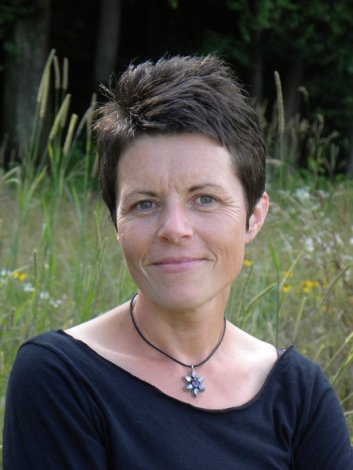
ErinHardieHale_headshotErin Hardie Hale is a Research Associate at University of New Hampshire, which coordinates the NH Food Alliance that is developing a statewide food systems strategy, which is connected to the broader New England Food Vision.

This interview was conducted via email and phone by Erica Campbell of the Vermont Farm to Plate Network, and member of the APA-FIG Leadership Team.

What is your current position, and how does your organization engage in food system planning efforts? I am a Research Associate at the NH Food Alliance. The NH Food Alliance aims to be an informed, connected, and active food systems network. We are developing a statewide food systems strategy, which is connected to the broader New England Food Vision. We convene working groups, regional and statewide gatherings, and other opportunities for participants to build relationships that add value to their work. We communicate and share information and resources about the NH food system with the network and general public regularly and in multiple ways. We also collaborate to implement, monitor, and adapt the action priorities identified by network participants.

How long have you held this position? Since 2013

What do you enjoy about your work? I find working in food systems exciting, because figuring out how to feed ourselves is at the core of so many critical issues, including environmental sustainability, social justice, community health, and economic viability.

I also find that people who work in the food system – from producers and entrepreneurs to food access advocates and policymakers – are passionate about what they do. The NH Food Alliance is all about encouraging collaboration in the food system and I love working with and learning from people who love what they do!

Similarly, what do you find challenging about your work? The complexity of the food system means there’s no one way to address challenges that will satisfy everyone, and finding common ground takes time, trust, and relationship building. There is a constant tension in our network between what many people see as the time intensive work of collaborative planning and building relationships and the need to take action or “do something” concrete.

What areas of the food system do you focus on in your work? The NH Food Alliance connects individuals, organizations, and businesses across the food system so people in sectors that don’t traditionally collaborate can learn from each other and work together toward shared goals. Our first initiative, the Farm, Fish, and Food Enterprise Viability Initiative, is the result of over two years of building our network, listening to hundreds of NH residents, and synthesizing dozens of reports. The common thread emerging from this work is that thriving local businesses are at the heart of our food system and can create cascading benefits for us all. Because we approach viability from a food systems perspective, our goals and approaches go beyond improving the bottom lines for individual entrepreneurs. Instead, we’re looking to create the conditions that support thriving businesses through education, market development, improved food access, and land and sea resource protection.

In the work that you perform, where does addressing food systems issues fit in? How has this changed over time? Everything we do addresses food system issues!

Do you consider yourself a food systems planner? Why or why not? Not by training! I have a PhD in agriculture and science education from UC Davis with a focus on coalition building and collaborative learning and research between farmers and conservation groups in California’s Central Valley. I also have a master’s degree from UC Davis in International Agricultural Development, have worked on farms in Oregon and NH, and have extensive experience in agricultural training and education, working with farmers, farmworkers, and rural communities around the globe, from California and Kenya to Bolivia and Egypt.

What is the biggest food systems planning-related hurdle your organization faced in recent years and how was it dealt with? As I mentioned before, building trust between stakeholders with different perspectives has been a big challenge. There was some skepticism early on about why the UNH Sustainability Institute was taking the lead to coordinate the network building and planning process and so it was difficult at first to get all of the key stakeholders and leaders in the room talking with us. We worked hard to distribute leadership across different groups, make strategic connections, and be very transparent about our process. We also chose to focus our first initiative on viability, in part, because it was an issue that groups across the food system could unite behind.

Who has had the most influence on you as a planner? As a food systems planner? I learned everything I know on the job. Curtis Ogden, our process facilitator, and his organization, the Interaction Institute for Social Change, had a profound impact on the way we approached our network building and planning effort. We’ve also had a very supportive group of other state planners in New England that meets in a monthly Community of Practice call hosted by VT Farm to Plate coordinators, so we were able to learn from other states like Vermont, Maine and Rhode Island that were ahead of us in the process or doing things differently.   Food Solutions New England has also provided an important regional framework and avenue for thinking about planning beyond state borders.

Do you have any advice for someone entering the food systems planning field? What makes you successful in your work? What skills do you use the most in your food systems planning related work? I don’t think that we necessarily need new technologies or scientific research to tell us how to grow healthy food and get it to everyone who needs it in an ethical and responsible way. What we really need to know how to do is share ideas and learn from each other. People are making it work in small and big ways all over the region; learning about what works in one place and adapting it for another and supporting that innovation and collaboration is a driving force of the NH Food Alliance.


Faces of Food Systems Planning: Mary Chicoine Praus

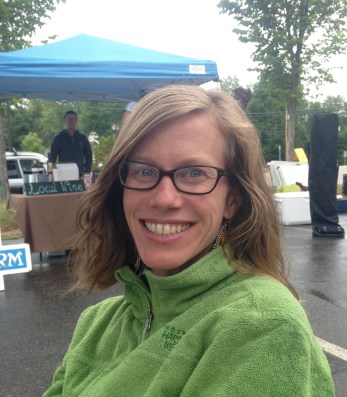
Mary Chicoine Praus head shotMary Chicoine Praus is a Land Use Planner at Franklin Regional Council of Governments in Greenfield, Massachusetts. The organization is the co-author of the Massachusetts Local Food Action Plan and has undertaken various regional food system planning efforts.

This interview was conducted via email by Erica Campbell of the Vermont Farm to Plate Network, and member of the APA-FIG Leadership Team.

What is your current position (include your title and name of organization)? I am a Land Use Planner at the Franklin Regional Council of Governments, the regional planning agency for Franklin County. Our agency is located in Greenfield, Massachusetts.

How long have you held this position? Five and a half years

What do you enjoy about your work? I like being able to focus on several areas of interest, including farm and food system planning, green infrastructure and urban trees.

Similarly, what do you find challenging about your work? I find it challenging to have many projects at one time and to have enough time to devote to them all, especially those as complex and intricate as our food system.

What areas of the food system do you focus on in your work? I’ve focused on several areas: statewide comprehensive food system planning, regional farm and food planning for Franklin County with a focus on land and food access, and community food assessments for individual towns. We’ve completed the Franklin County Farm and Food System Project, focused on increased food access and food production, and co-authored the Massachusetts Local Food Action Plan.

In the work that you perform, where does addressing food systems issues fit in? How has this changed over time? Food system planning per se was not a stated focus of our agency five years ago. Now we are regularly working on food system related projects at several scales. Even if the primary goal of a planning project is not related to the food system, my colleagues and I are often thinking about the food system when we are working on open space plans, master plans, or transportation planning. I think there is more focus on social equity and food access, and more awareness of the need for access to affordable farmland, which permeates many areas of planning at the FRCOG.

Do you consider yourself a food systems planner? Although my official title is Land Use Planner, I do also think of myself as a food system planner.

What is the biggest food systems planning-related hurdle your community faced in recent years and how was it dealt with? I think funding is one of the biggest hurdles both for our organization and for many organizations and businesses in our region. After successfully obtaining funding for a couple of significant food system projects at the FRCOG, it has become more difficult to find funding. It has also become more competitive over time, especially for food system planning projects.

Do you have any advice for someone entering the food systems planning field? Ground your planning work in the real world – and do your homework to understand what work has already been done before hand. Be respectful of farmers and food processors – value their time and their real world experience. Don’t ask farmers and food processors to participate in your project unless there is real value to them for doing so.

What makes you successful in your work? What skills do you use the most in your food systems planning related work? I think being respectful of those already doing the work in the food system helps me to be more effective. The day-to-day skills I use the most are conducting research, analysis, and GIS mapping, creating graphics and infographics, and doing outreach to farmers and others in the food system community.

North American Food Systems Network: Connecting Food Systems Practitioners Across the U.S. & Canada

Special Guest Post from the North American Food Systems Network (NAFSN)

As a food systems lexicon continues to grow across academic, public, and private sectors, the practice of food systems work has taken shape.  A focus on how individuals and organizations are doing food system work has developed. By supporting food systems practitioners, The North American Food Systems Network (NAFSN) works to illustrate the true breadth and depth of food systems work, across sectors, within all communities, applicable to everyone who grows, manages, teaches or eats food.

NAFSN is a new organization founded in 2015 offering leadership and technical skills training, networking, and other professional development opportunities for the burgeoning group of individuals supporting the development of equitable and sustainable local and regional food systems. Members range from farm educators and community nutritionists to justice activists and scholars. The mission of this network is to coalesce the current disparate group of practitioners, and build individual and collective capacity to solve pressing food and agriculture issues across the U.S. & Canada.

So how does that happen from all corners of the United States and Canada? Presently, there are many innovative solutions and pioneering organizations working to address and understand the complex issues of food systems; for example, working to eliminate causes of food deserts, obesity, hunger, and other food-related human health issues as well as working to increase sustainable farming practices, ecological and economic health of farms and rural areas, and creating viable markets. There is a need for a holistic collaboration and coordination between and among these efforts.

Leaders are needed to guide and propel projects and insights, and NAFSN aims to provide the tools to build the necessary human capital and create a place for sharing and collective learning. NAFSN expects to see growth of competencies, increased best practices, and more effective targeting of resources as results of its efforts. Currently, NAFSN members are organized around Circles that house work teams. Collaboration, skill and knowledge sharing, and mentorship have driven special projects from certification and training expansion, policy and governance building, and social media and communications development.

 
NAFSN Founding Members are currently working on projects specific to funding, racial equity and inclusion, and member networking. We’d love to hear from you! For more information about our national partner organizations, membership, and current projects check out our website: foodsystemsnetwork.org, or facebook: facebook.com/NAFSN, or e-mail: Membership@FoodSystemsNetwork.org