Faces of Food Systems Planning: Trevor McCoy

McCoyTrevor

Name: Trevor McCoy

Current Positions: Georgia Tech – Masters of City Planning & Public Policy Candidate – Collaborating with my academic advisor, Dr. Michael Elliott to design and teach Georgia Tech’s first Sustainable Food Systems course.

Georgia Organics – Georgia Food Oasis Intern

1. What areas of the food system do you focus on in your work, and where does that fit in with the rest of the work that you do? As a student at Georgia Tech, I spend most of my time doing research, focusing on the environmental impacts of our global and national food systems. This is research that will be included in the Sustainable Food Systems course that my advisor and I have been designing and will teach together in January 2019.

My main interest lies in agriculture’s substantial carbon footprint, which does not receive the attention that it deserves. In 2014, the IPCC listed agriculture, forestry, and other land use as 24% of global carbon emissions. By comparison, all of land, sea, and air transportation combined are only 14% of our emissions.

Everyone eats. My goal is to bring as much attention to food’s role in our carbon footprint as I can.

2. What do you enjoy about your work? I like to focus on big problems. Although they’re intimidating and sometimes scary, the biggest problems also provide the most room for us to improve, become more efficient, and ultimately come closer to achieving sustainability. There is so much wrong with our food system that it can be depressing, or it can be motivating. When we focus on the world’s worst problems, we can create the world’s most important solutions.

3. Similarly, what do you find challenging about your work? Food is deeply personal. This makes it easy to accidentally offend someone. People eat what tastes good, and it’s extremely difficult to change established dietary habits, as we’ve seen with products like sugary soft drinks. We know that these sugar-filled beverages aren’t healthy for us, but millions of Americans drink them every day. I find them particularly hard to resist around the holidays.

Similar to sugar’s role in America’s health, many foods play an important role in our most pressing environment issues. Like sugar, these foods are consumed by millions of Americans every day, which means that finding a way to approach conversations and debates about these issues with friends, family, or colleagues can be extremely tricky.

4. Do you consider yourself a food systems planner? Why or why not? This is a hard question for me to answer. The short answer is that I’m still training to be a food systems planner. I have gotten my feet wet by working with different organizations that are determined to eradicate food deserts, but most of my work has been researching the problems with our food system, rather than trying to actually solve them. I plan to transition from research to application over the next few years, taking the knowledge that I have built and applying it to create solutions through planning and policy.

5. What is the biggest food systems planning-related hurdle your community/organization faced in recent years and how was it dealt with? In my work with Georgia Organics’ Food Oasis Program, I have joined their efforts to improve nutrition and provide food security. We are helping the city of Augusta to connect and engage its residents with local farmers to organize community-led interventions for improving their local food environment. Additionally, we have been assisting individuals who are interested in contributing to the food system, especially through urban agriculture.

But America’s nutrition epidemic will not be solved without a heavy dose of creativity and a lot of hard work. It will take a coordinated effort that breaches political lines and all levels of government to win our country’s simultaneous wars on undernutrition and overnutrition.

6. How has your perception of food systems planning changed since you first entered the planning field? When I first came into the world of food systems planning, I didn’t really “believe” in urban agriculture. The amount of food that a city’s residents require is far greater than the amount that urban agriculture can offer. I used to grow frustrated with people who claimed that urban agriculture was the solution to our nation’s food crises. However, over time I have come to realize how much value urban agriculture has to offer.

There is no question that urban agriculture is not enough to feed our urban population. If we want to change the food system, it needs to take place in the urban setting as well as rural communities, where the vast majority of our food is actually grown. However, urban agriculture plays a vital role in our fight to overhaul the current system. Two hundred years ago, over 80% of Americans were farmers. One hundred years ago, over 20% of Americans were farmers. Today, less than 2% of Americans are farmers. This has distanced the average American’s connection to their food – seeing where it comes from, how it’s made, and what it takes to get food from the field to the plate.

Urban Agriculture helps to recreate the bridge between people and their food by bringing the production of food to the people in a role that is primarily educational. Although it cannot feed the population, urban agriculture reconnects us to our land and can help us to determine what we should eat in a world where such a simple question has become incredibly complex. I especially believe that every school in every city should have a thriving garden, where children can develop a connection to local fruits and vegetables, which will help them to choose which foods to eat during their entire lives. Ron Finley said it best in his Ted Talk, “Children who grow cauliflower will eat cauliflower.”

7. Who has had the most influence on you as a planner? As a food systems planner? Of course, all of my professors at Georgia Tech have been incredibly influential. Most of all, my advisor, Dr. Michael Elliott, who helped me to channel my interests in food systems into something productive and has had a formative influence on me since I joined this program.

I also need to mention Michael Pollan. Over the past year I’ve been reading all of his books and watching his documentaries, and it has been an eye-opening experience. His writings exposed me to some of the biggest issues of our food systems, and Omnivore’s Dilemma rocked my entire worldview.

8. What do you wish you would have known before going to planning school? When I first came to Georgia Tech, I thought I would be happy in the environmental specialization, but I quickly realized that most of the environmental issues I cared about involved food. For some time, I wished that I had gone to a university whose planning department had a greater emphasis on food systems, and if I had known that I would be this passionate about food then I probably wouldn’t have chosen Georgia Tech. However, because Georgia Tech’s planning department has not historically placed a large emphasis on food, I have been given the opportunity to assist in the creation of the university’s first food systems class, which has been an honor. I believe that this will be the first class of many, and hopefully one day our planning department will offer an entire food systems specialization.

Farm Bill Issue Briefing

Join APA’s Policy and Advocacy team for a timely Planners’ Advocacy Network briefing on legislative action to reauthorize the Farm Bill. The Farm Bill, the United States’ primary agricultural and food policy tool, is set to expire at the end of September. Learn about differences between the Senate and House versions of the bill and what’s next now that Congress is back from July 4 recess, how the final bill could impact local planning efforts, and what planners can do now to shape the debate in Congress. Register for the free webinar today: https://register.gotowebinar.com/register/6313959108664858627

And if you care about food systems and planning, don’t forget to sign FIG’s APA Division petition here: www.surveymonkey.com/r/APAFoodSystems.

Help FIG Become an Official APA Division

The APA-FIG Leadership Committee is pursuing status as an APA Division. To make this happen we are required to complete APA’s official petition. We need 300 signatures and, so far,  we’re over half way there with 160 signatures. Help us reach our goal of 200 by August 1!

Here’s four easy ways to help!

  1. Sign the petition. (Note: you must be an APA member to sign the petition).
  2. Share the petition with other APA members of your regional or state APA chapters.
  3. Share with your colleagues through our Facebook and Twitter posts.
  4. Support the leadership committee as we make the transition from an interest group to a division. Please email Kara Martin at kara@foodinnovationnetwork.org.

Why become a division?

Last fall we survey APA-FIG members online and over 94% were support becoming an official division. Here’s why in a nutshell:

Food is a sustaining and enduring necessity. Yet among the basic essentials for life — air, water, shelter, and food — only food has been absent as a focus of serious professional planning interest. With the 2007 adoption of the Policy Guide on Community and Regional Food Planning, the American Planning Association signaled its intent to include the food system as a critical area of planning interest. Since 2007, APA has provided a steady and growing body of guidance on community and regional food systems planning (e.g. PAS Reports, Memos, Essential Info Packets, and, importantly, the creation of APA’s Food Systems Interest Group (APA-FIG) in 2009). This collective guidance has helped bring to the forefront the cross-sectional impact of food systems on community and regional planning as a critical component of a healthy, sustainable, and resilient community.

What we will do as a division?

As a Division, our fundamental goal is to help planners build stronger, more just, equitable, and self-reliant local, community, and regional food systems. By serving as a platform for collaboration, information, and leadership, we will:

  • Advance the profession of food systems planning so that it is recognized as a core area of community and regional planning practices.
  • Integrate principles of food systems planning with more traditional planning practices of  land use, transportation, economic development, parks and recreation, housing, and other areas of mainstream planning practice.
  • Provide leadership and intellectual resources to APA members and staff on food systems planning policies and issues.
  • Host networking, resource sharing, education, and professional development and mentoring opportunities to new and seasoned planners and allied professionals.
  • Engage other planners and allied professionals to shape local, state, regional, and federal food policy.

Please support APA-FIG as we take this next big step together!

Thanks,

APA-FIG Leadership Committee

Signatures needed for a petition to become an APA Division

apa-figlogo-1102.png

In October and November, 173 APA-FIG members completed our online survey to gauge interest in pursuing Division status. About 94% of respondents think APA-FIG should become an official Division of the APA.

Based on this feedback, the APA-FIG Leadership Committee is pursuing status as an APA Division. The next step to making this happen is completing APA’s official petition: https://planning.org/divisions/groups/food/petition/.

To support this effort, please indicate your commitment to joining the proposed Division by signing this petition (note: you must be an APA member to sign the petition). We will need 300 signatures.

Please spread the word and help us make this happen.

Thanks,

APA-FIG Leadership Committee


APA-FIG Survey 2017 – Interest in Pursuing APA Division Status

The APA-FIG Leadership Committee is interested in pursuing Division status. Please take a few minutes to fill out this survey (https://goo.gl/forms/PVVaEISMJZWIhhqz2) and let us know your thoughts.

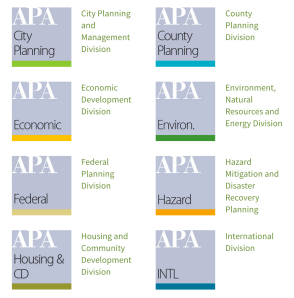
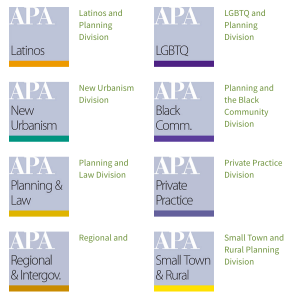
As a Division of the American Planning Association, APA-FIG would become 1 of 22 APA Divisions representing a community of professionals. APA Divisions have 501(c)3 status, have a seat on the Divisions Council, are governed by individual bylaws, prepare an annual work plan and budget, and have both elected and appointed leadership positions.

Screen Shot 2017-10-13 at 10.26.46 AMScreen Shot 2017-10-13 at 10.29.13 AM


By becoming an official APA Division, APA-FIG could improve its visibility within the APA and increase awareness of food systems planning among the broader planning community, and have a greater connection to APA networking and professional development opportunities.

Growing Local: Strengthening Food Systems Through Planning and Policy

DSC_0770

Local governments are becoming increasingly involved in planning and policy making for community food systems, both as leaders and as partners with the private sector. Often responding to community pressure, in some cases they are the driving force, motivated by a desire to strengthen local economies, improve food security and nutritional outcomes, and to support agriculture and preserve farmland…

For the entire blog post, check out the American Planning Association’s website here.

Washington State Food Systems Roundtable Releases 25-year Vision for Food System

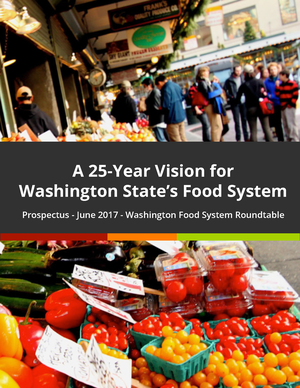
WA_FS_Prospectus_072417_FINALThe Washington State Food Systems Roundtable (RT) recently released the long-awaited Prospectus, which presents a 25-year vision for Washington State’s Food System. The Roundtable was a broad, diverse coalition of public and private partners committed to creating a food system that promotes the health of people, fosters a sustainable and resilient environment, is economically vibrant, and creates an equitable and just society. The Roundtable prided itself on its broad representation, including government, Tribes, local food policy councils, agriculture, food enterprises, labor, anti-hunger and nutrition advocates, economic development organizations, academia, public health, philanthropy and others.

This Prospectus is a road map for how Washington might achieve this vision and provides a framework for collaboration, engagement and shared responsibility. The Prospectus provides the opportunity for alignment across sectors, distributed leadership, and continued development of strategies over time. Washington’s Prospectus is not the first state to have undergone a statewide food systems planning effort. In 2006, the Michigan Food Policy Council produced a report of recommendations, and, in 2015, Vermont released its ten year Farm to Plate Strategic Plan. These plans have moved forward in implementation through the support of backbone organization. A local organization, Food Action, will steward Washington’s Prospectus and begin bringing the strategies into fruition.

APA National Planning Conference 2018

This slideshow requires JavaScript.

APA has officially opened their proposal submission portal to collect conference session proposals for the 2018 National Planning Conference in New Orleans this April 21-24. The deadline to submit proposals is August 29th.  Proposal guidelines and submission instructions can be found here.

Faces of Food Systems Planning: Marcia Caton Campbell

MCatonCampbell.jpgMarcia Caton Campbell is the executive director of the Center for Resilient Cities (CRC), a 501(c)(3) nonprofit organization based in Madison, WI. CRC’s work pulls together many “systems” of a neighborhood: how we build community, how we feed ourselves, how we educate our children, how we produce energy and manage natural resources, how we create jobs, and how we design buildings and reclaim our neighborhood spaces. Marcia has close to 20 years of experience in community-based planning and food systems planning, research, and practice. Prior to joining CRC in 2006, Marcia taught urban and regional planning at the University of Wisconsin–Madison, specializing in food systems planning, community-based planning, and environmental conflict resolution. Her research, teaching, and publications focused on consensus building and community-based planning with diverse publics, and multi-stakeholder conflict resolution. She is a member of the American Planning Association’s Food Interest Group Leadership Committee and serves on the City of Milwaukee’s Green Team, coauthoring ReFresh Milwaukee’s food systems chapter. She is co-author of Urban Agriculture: Growing Healthy Sustainable Places and Principles of a Healthy, Sustainable Food System.

This interview was conducted via email in March 2017 by Kimberley Hodgson of Cultivating Healthy Places, and chair of APA-FIG.

What do you enjoy about your work? Although my entire career has been grounded in consistent themes of equity, social justice, collaboration and progressivism, what I enjoy the most about the work is that no two days are exactly alike. I am never bored – and I never tire of learning about what other food systems planners are doing and how I can bring their work to bear upon my own.

Similarly, what do you find challenging about your work? The current national political climate is increasingly challenging for food systems work. It’s a climate we’ve been living with in Wisconsin for a while now. There’s a short-sightedness and lack of vision at the higher levels of elected office about the multifaceted nature of food systems planning – and how advances in our field translate into advances in neighborhood and community resilience, local and regional economies, public health, you name it. Food systems planning can serve a bridging function across political and economic spectrums, because everybody wants and needs to eat, healthfully, economically and, increasingly, sustainably.

What areas of the food system do you focus on in your work? My organization’s mission is to cultivate healthy, resilient people in healthy, resilient places. Our work is place-based, with community vision leading the way. In our current work, we operate the Badger Rock Center, a collaborative project in Madison, WI, that involves a neighborhood center, a public charter middle school with an urban agriculture curriculum, and a variety of food system-related activities (urban agricultural production, commercial kitchen, winter farmers market). We have been involved in local food policy work in both Madison and Milwaukee, and hold community gardens in trust in Madison.

In the work that you perform, where does addressing food systems issues fit in? How has this changed over time? I’ve worked on many aspects of the food system in planning over my career, from theory-building scholarship to professional practice, from site-specific urban agriculture projects to citywide food policy. What’s compelling to me right now from a planning perspective is cracking large institutional procurement and food supply chain issues, and developing food policy that leads to more resilient local and regional food systems. And, I want to see food justice achieved in the global North and South, though I recognize that the best role I might play in supporting that work may well be one of “stepping up to step back.”

Do you consider yourself a food systems planner? Absolutely.

How has your perception of food systems planning changed since you first entered the planning field? Well, food systems planning didn’t exist when I first entered the planning field in the early 1980s. I was lucky to have been in the right place at the right time: to participate in the field’s early development in the late 1990s, and to continue working in food systems planning throughout my career. These days, I no longer have to explain – in certain circles, anyway – what a food systems planner does, thanks to the growing interest on the part of the general public in sustainability and resilience.

Who has had the most influence on you as a planner? As a food systems planner? Dale Bertsch and Ken Pearlman, my planning professors at Ohio State, played a pivotal role in shaping my early interests and progressivism. I benefitted from working with them for many years, first as a master’s student, then as managing editor of the Journal of Planning Literature, and finally as a doctoral student. Tim Beatley’s thoughtful engagement and support of my work has been a great help over my entire career, dating back to my time at the Journal. I think I own every book Beatley has ever published.

But without question, Jerry Kaufman has had the deepest, most profound influence on me as an urban planner and food systems planner. I was so incredibly fortunate to become Jerry’s colleague as food systems planning was in its infancy. We worked together for close to a decade at the UW—Madison on research projects, scholarship, and professional practice issues — and then for the rest of his life, as close friends and colleagues on the Growing Power board of directors and as members of APA-FIG. Every professional conversation we had touched upon the food system. Many of the personal conversations did too.

My enthusiasm for food systems planning continues to be fed by the second and third generations of food systems planners, in the breadth, depth and richness of their food systems work. I think of Samina Raja and Kimberley Hodgson especially – and too many others to name! I have a front row seat for a lot of this, in my capacity as a member of APA-FIG’s leadership team.

Do you have any advice for someone entering the food systems planning field? What makes you successful in your work? What skills do you use the most in your food systems planning related work? Food systems planning is both a stand-alone area of intensive focus and work, and interdisciplinary and connected to every other subfield of planning. To be successful, you need to be grounded traditional planning skills: systems thinking combined with attention to detail, time and project management, data collection and analysis leading to evidence-based recommendation. But you also need the softer skills of negotiation, mediation, conflict resolution; collaboration, especially in cross-sectoral partnerships; the ability to recognize your own inherent privilege and associated biases; and above all, the ability to listen to what others have to say.

 What do you wish you would have known before going to planning school? That there’s lots of room for outside-the-box and creative thinking. I wish I had thirty more years of food systems planning ahead of me – I think it’s the most exciting work to do as a planner.


Faces of Food Systems Planning is a series of interviews with practicing planners from across North America who are engaging in food systems planning and policy work. This series is part of APA-FIG’s efforts to highlight food systems planning as an important planning topic. The APA will be featuring 8 food system planners at the National Planning Conference this May 2017 in a special “Faces of Food Systems Planning Session”. Click here for more information.

Faces of Food Systems Planning: Kimberley Hodgson

KHodgson_2013Apr.jpgKimberley Hodgson, MURP, MS, AICP, RD is the principal and founder of Cultivating Healthy Places, an international consulting business based in Vancouver, BC that specializes in community health, social equity, and resilient food systems planning. Before launching her business in 2012, she worked for the American Planning Association in Washington, DC as a senior research associate and manager of the Planning and Community Health Center. As a certified planner and health professional, her work focuses on conducting policy-relevant research and providing technical assistance on the design and development of healthy, sustainable places. She is a co-investigator of Growing Food Connections, a national project to build local government capacity to strengthen community food systems. She chairs the American Planning Association’s Food Systems Planning Interest Group and serves on the Vancouver Food Policy Council. She is the author of Planning for Food Access and Community-Based Food Systems, co-author of Urban Agriculture: Growing Healthy Sustainable Places and co-author of the Principles of a Healthy, Sustainable Food System.

This interview was conducted via email in March 2017 by Marcia Caton Campbell of the Center for Resilient Cities, and member of the APA-FIG Leadership Committee.

What do you enjoy about your work? I love the variety of work I get to do. As a consultant, I work with a diversity of clients (from developers and municipal governments to large non-profits like universities) on a range of projects (policy identification and analysis, policy-relevant research and evaluation, etc.). My work spans the health, food systems, and planning fields. I never get bored.

Similarly, what do you find challenging about your work? As a trained and certified urban planner and health professional, I sometimes feel that I don’t fit anywhere. I occupy a space in between fields. However, this dual background provides a unique perspective. I am able to navigate between the public health and planning fields.

What areas of the food system do you focus on in your work? My work focuses on the entire food system – from production to waste management, more specifically how urban and regional planners can plan for healthy, sustainable food systems and the role of plans and policies in strengthening local food systems.

In the work that you perform, where does addressing food systems issues fit in? How has this changed over time? Before becoming a planner, my work focused on nutrition and food access. While a dietetic intern in New York City, I was exposed to health and food access inequities faced by low-income residents. Many of my clients did not have a grocery store in their neighborhood or had to travel long distances to access healthy, affordable foods. This experience sparked my interest in urban planning. While nutrition education is important, I realized I was more interested in how the built and natural environments impact a person’s health behavior. Although my path was not linear, I ended up pursuing a second master’s degree in urban and regional planning. This degree allowed me to think about specific health inequities in different ways, about how an individual’s neighborhood can support or inhibit health and well-being.

My career in food systems planning initially focused on food access and equity, but the more work I did in the field, the more I realized that food access is a systems problem. A problem that is greatly impacted by how and what type of food is produced, how it is aggregated, distributed and processed, etc. Urban planners are trained to think in systems – how everything is connected to everything else. My work with the American Planning Association taught me that the food system is connected to other urban food systems – land use, transportation, solid waste, housing, air and water, and more. It is not an isolated system and shouldn’t be treated in isolation.

Do you consider yourself a food systems planner? I consider myself an urban planner with a specialization in community health planning and food systems planning.

How has your perception of food systems planning changed since you first entered the planning field? For the past decade, my perception of food systems planning has evolved. I have been very fortunate to lead national research studies that have identified and explored how local governments and planners are planning for healthy, sustainable food systems. These studies have shaped my perception of the field and expanded how I view food systems planning.

Additionally, I have served as a member of the Vancouver Food Policy Council (VFPC) since 2012. This all volunteer civic advisory committee has helped me to experience the challenges residents and community groups face in affecting policy changes.

Who (or what) has had the most influence on you as a planner? As a food systems planner? I have been very fortunate to work with brilliant people throughout my career as a planner. Several people have had a huge impact on my work: Joseph Schilling, Jerry Kaufman, Samina Raja, Marcia Caton Campbell, Kami Pothukuchi, Nisha Botchwey, Bill Klein. Each of these people have mentored me at one point in time and taught me about the importance of community engagement, equity and sustainability within food systems planning.

My life experiences have also had a tremendous influence on me as a planner. I am passionate about food systems equity and justice work, in part because I grew up in a low-income family and was a recipient of free and reduced priced lunches and food stamps. I have first-hand knowledge of food insecurity.

Do you have any advice for someone entering the food systems planning field? What makes you successful in your work? What skills do you use the most in your food systems planning related work? A degree in urban planning is essential. While my background in food policy and nutrition has helped me in my career, my urban planning degree has allowed be to think about the bigger picture: how land use, transportation, solid waste, housing, development, and other decisions made by municipalities and counties influence the food system. How everything is connected. My urban planning degree has also provided me with a robust understanding of local government policy. That said, many universities offer a food system course. These courses, whether or not they are housed in planning, offer a chance to explore food system issues.

Traveling and living in a number of different places has exposed me to a number of urban planning and food systems issues. I grew up in a suburb of Dallas, TX, lived and worked in New York City; Paris, France; Boston, MA; Blacksburg/Roanoke, VA; Alexandria, VA; Washington, DC; and Vancouver, BC.

In terms of consulting, skills in time, budget, and project management are essential. I was fortunate to learn them in a previous job. Without them consulting would be daunting.

What do you wish you would have known before going to planning school? One thing planning school doesn’t teach you is to think “outside the box” in terms of jobs and career possibilities. Being a public sector planner or working for a private firm are not the only job positions available to planners. I have met so many “undercover” planners working in various non-planning jobs and doing amazing food systems work.


Faces of Food Systems Planning is a series of interviews with practicing planners from across North America who are engaging in food systems planning and policy work. This series is part of APA-FIG’s efforts to highlight food systems planning as an important planning topic. The APA will be featuring 8 food system planners at the National Planning Conference this May 2017 in a special “Faces of Food Systems Planning Session”. Click here for more information.